How to Choose Coffee Beans: A Simple Guide
Learn how to choose coffee in 5 simple steps. Match your brew method, roast level, and origin to your taste — or scan any bag with Cafy for instant info.
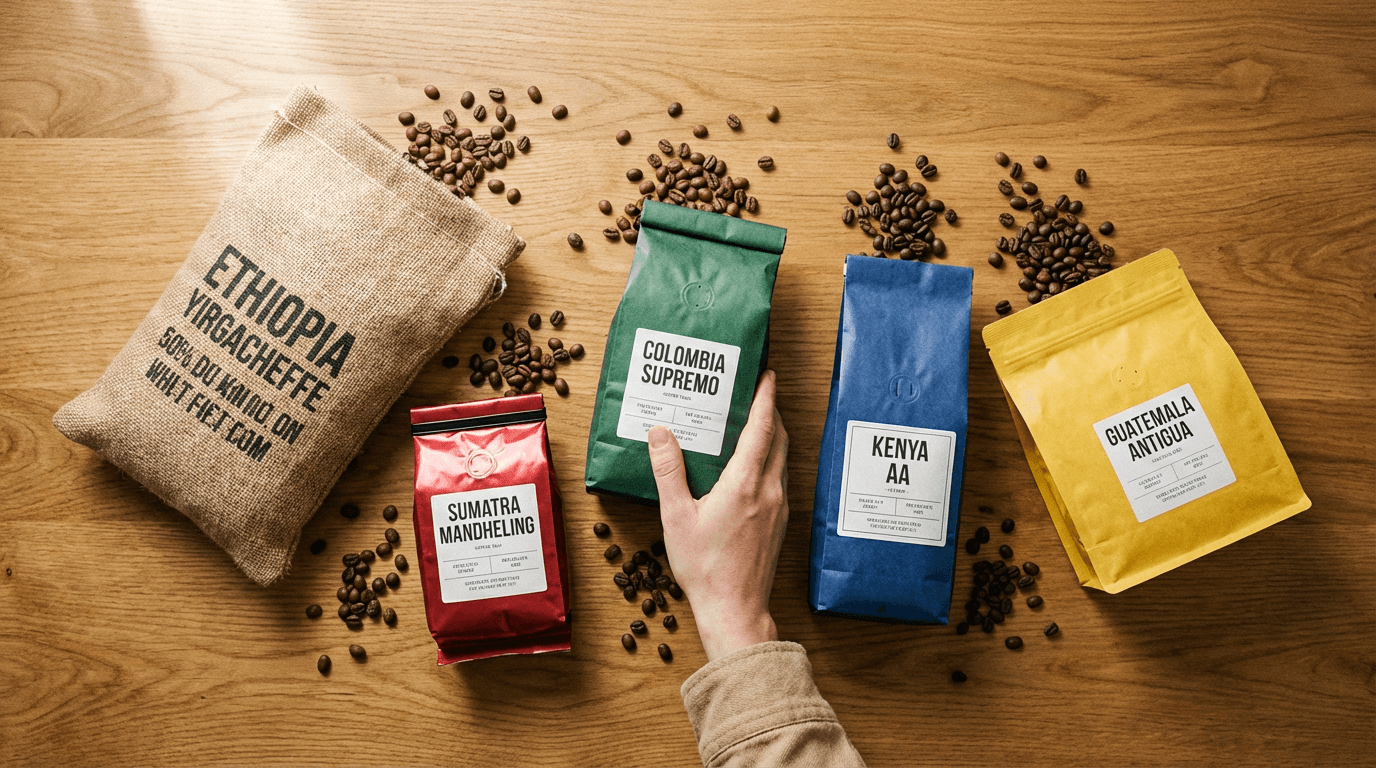
Standing in the coffee aisle, you're staring at 40+ bags. One promises "smooth chocolate notes," another says "bright acidity with stone fruit." A third just says "bold." Not exactly helpful when you're trying to figure out how to choose coffee that actually matches what you like.
You're not alone. According to the National Coffee Association, 66% of American adults drink coffee daily — yet most grab the same bag every time because the selection feels overwhelming. There's a better way to choose coffee beans.
Quick Summary: Learning how to choose coffee beans comes down to five decisions: your brew method, roast level, origin, single origin vs. blend, and whole bean vs. ground. Match those to your taste preferences and you'll never grab the wrong bag again. Or skip the guesswork entirely — scan any coffee with Cafy and get instant tasting notes, roast level, and flavor profiles.
How to Choose Coffee Beans in 5 Simple Steps
Think of choosing coffee beans like building a playlist. You don't need to understand music theory — you just need to know what sounds good to you. These five steps walk you through each decision in order, from most important to least. By the end, you'll know exactly how to pick coffee at the store with confidence.
Step 1: Start With Your Brew Method
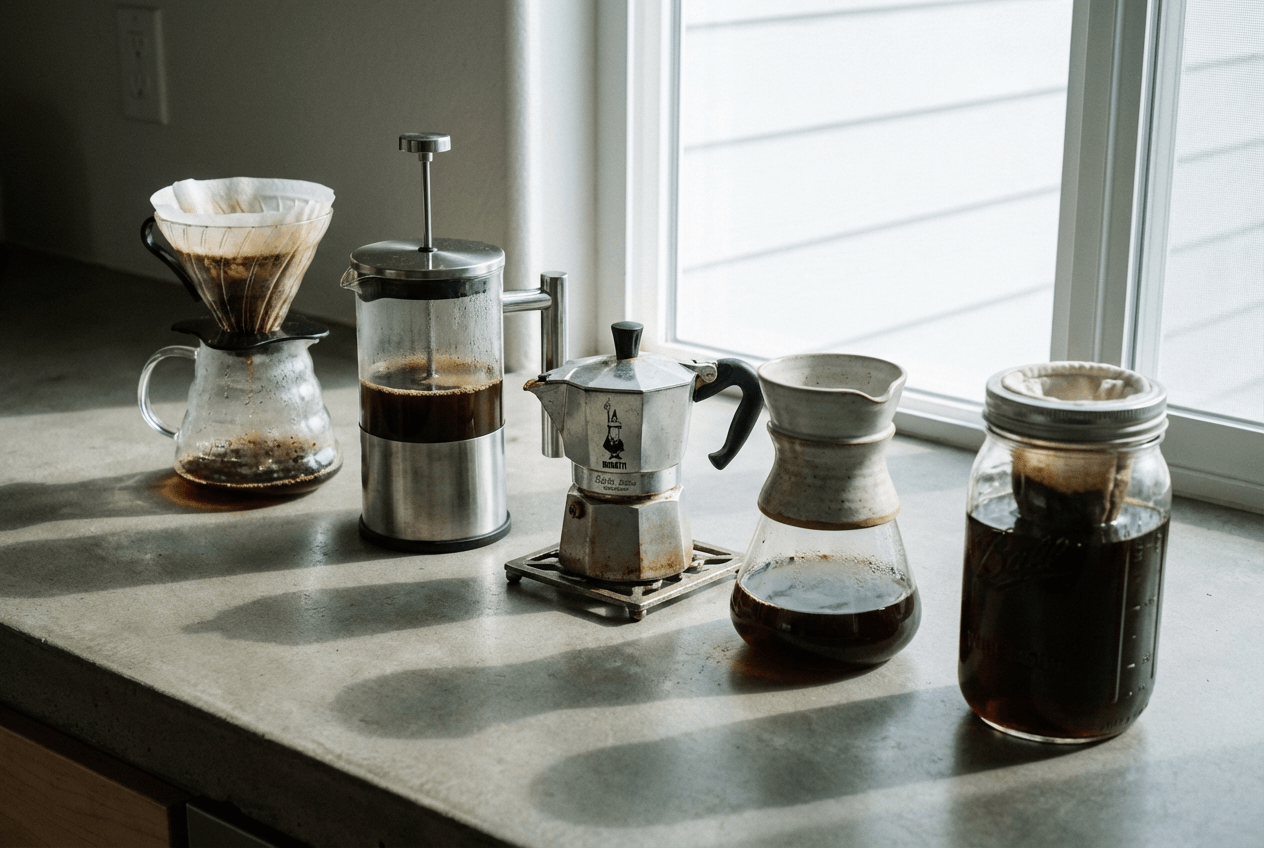
Your brew method matters more than most people realize. It determines what grind size and roast profile will produce the best-tasting cup of coffee. Here's the cheat sheet:
Drip coffee maker — The most forgiving method. Medium roast, medium grind. If you're buying pre-ground coffee from the store, it's almost certainly ground for drip. These machines work well with nearly any bean, making them perfect for beginners still learning how to choose coffee beans they enjoy.
French press — This full-immersion method produces a rich, heavy-bodied cup. Go with medium-dark to dark roast and always use a coarse grind (about the texture of sea salt). French press is ideal for people who like their coffee bold and full-flavored.
Espresso — Concentrated by nature, espresso needs a fine grind and beans that can handle high-pressure extraction. Medium to dark roasts are traditional choices for espresso, especially if you add milk to your cup. Lighter roasts can also work — they'll produce brighter, more acidic shots with complex flavor.
Pour-over — This method rewards nuance. Light to medium roasts shine here because pour-over brewing highlights the bean's origin character — florals, fruits, and subtle sweetness come through clearly. Use a medium-fine grind (think table salt).
Cold brew — Cold water extraction over 12-24 hours produces a smooth, low-acid concentrate. Dark roasts are the classic choice for cold brew (think chocolate and caramel notes), though medium roasts work well if you prefer brighter, fruitier flavors in your cup. Coarse grind is essential.
Don't own a brewer yet? Start with a drip coffee maker or French press — both are affordable, forgiving, and work with a wide range of coffee beans.
Step 2: Pick Your Roast Level
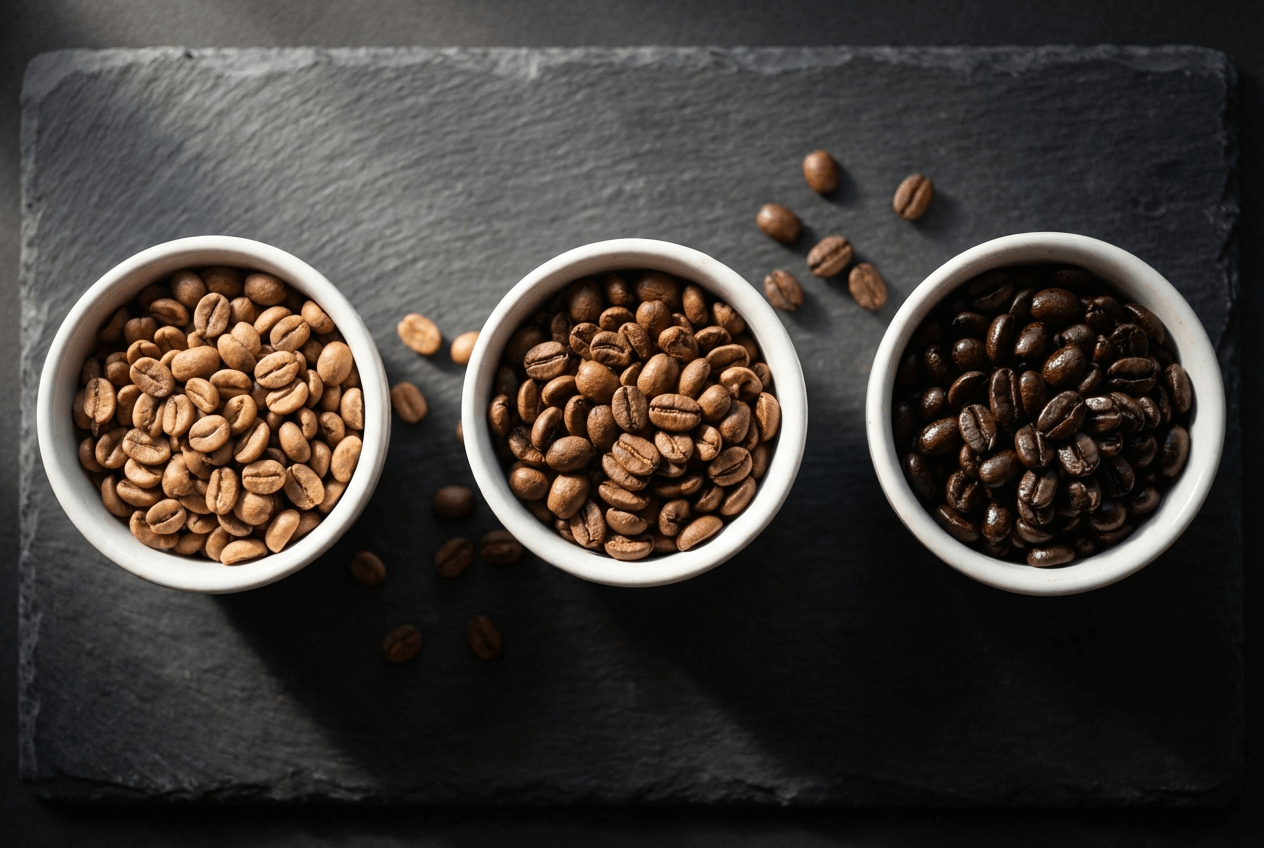
Roast level is where most coffee shoppers get confused. Here's what actually changes as beans roast longer:
Light roast — Roasted just past "first crack" (the point where beans audibly pop). Light roasts preserve the bean's origin character, delivering more fruity, floral, and tea-like flavor notes. They're higher in acidity and taste brighter overall. Contrary to popular belief, light roast beans actually retain slightly more caffeine than dark roasts by weight.
Medium roast — The crowd-pleaser. Medium roasts balance origin character with roast sweetness, producing flavors like caramel, chocolate, and toasted nuts. Less acidity than light, fuller body, and the most popular roast level in America. If you're unsure where to start, a medium roast is your safest pick.
Dark roast — Roasted past "second crack," these coffee beans are oily, bold, and smoky. The roast flavor dominates over origin character — expect dark chocolate, charcoal, and toasted spice in every cup. Dark roasts have the lowest acidity, which makes them easier on sensitive stomachs.
The quick rule for how to choose coffee at the store:
- Like fruity, bright, tea-like coffee? → Light roast
- Like balanced, sweet, easy-drinking coffee? → Medium roast
- Like bold, smoky, no-nonsense coffee? → Dark roast
For a deeper dive into what each level tastes like, check out our guide to coffee roast levels.
Step 3: Choose Your Coffee Origin
Where coffee grows changes how it tastes — dramatically. Climate, altitude, and soil (collectively called terroir) give coffee beans from different regions distinct flavor personalities. You don't need to memorize every country, but knowing the three major coffee-growing regions helps when you're deciding what coffee to buy:
Latin America (Brazil, Colombia, Guatemala, Costa Rica) — The crowd-pleasers. Expect balanced, clean cups with notes of chocolate, nuts, caramel, and mild fruit. Colombian coffee is famously smooth and approachable. Brazilian beans tend toward nutty and low-acid. If you're buying your first bag of specialty coffee, start here.
Africa (Ethiopia, Kenya, Rwanda) — This is where things get exciting. Ethiopian coffee beans often carry tasting notes of blueberry, jasmine, or bergamot. Kenyan coffees are bright, juicy, and wine-like in character. These origins are for people who want their cup to taste like more than just coffee.
Asia-Pacific (Sumatra, Java, India, Papua New Guinea) — The wild cards. Sumatran coffee is earthy, herbal, and heavy-bodied — almost savory. Indian Monsoon Malabar is spicy and funky. These coffees divide opinion, but if you enjoy bold, unconventional flavor profiles, they're worth trying.
Arabica beans make up about 60% of global coffee production and are generally considered the higher-quality species. Robusta beans contain roughly twice the caffeine but tend to have a more bitter taste. Most specialty coffee is 100% Arabica.
To learn more about the differences, read our guide to types of coffee beans.
Step 4: Single Origin or Blend?
This is a simpler decision than it sounds:
Single origin means every bean in the bag comes from one specific place — a country, region, or even a single farm. You'll taste the unique character of that particular terroir. Single origins are seasonal (coffee is a crop, after all) and tend to cost a bit more. Choose single origin coffee when you want to explore distinct flavors.
Blends combine beans from multiple origins to create a specific, consistent flavor profile. A roaster might mix a chocolatey Brazilian bean with a fruity Ethiopian to craft something balanced and complex that tastes the same year-round. Choose blends when you want reliability in your daily cup.
Neither is objectively better. Single origin is like a wine tasting; a good blend is your favorite everyday bottle.
Step 5: Whole Bean or Pre-Ground Coffee?
Whole bean coffee stays fresh for 2-4 weeks after roasting when stored properly in an airtight container away from light and heat. Grinding right before you brew gives you the freshest, most flavorful cup because you're minimizing oxygen exposure.
Pre-ground coffee starts losing flavor quickly after grinding — more surface area means faster oxidation. That said, pre-ground is perfectly fine if you don't own a grinder. Buy smaller bags and use them within a week or two of opening for the best taste.
The bottom line: if you own a grinder (even a basic $30 hand grinder works), buy whole bean coffee. If you don't, pre-ground is still miles better than skipping good coffee entirely.
What to Look for on a Coffee Bag
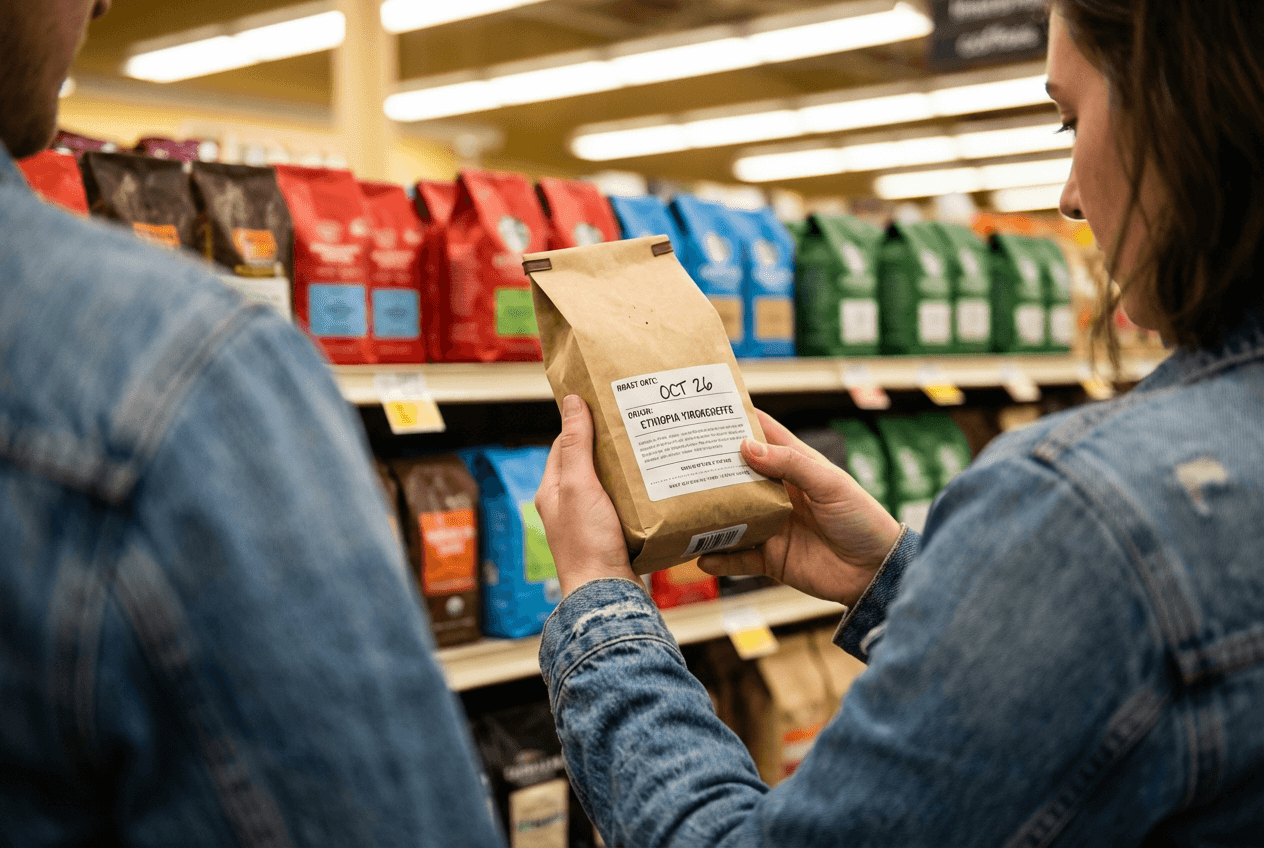
Now you know how to choose coffee beans by brew method, roast, and origin. But when you're in the store holding an actual bag, here's what to check before you buy:
Roast date — This is the single most important detail on any coffee bag. Look for a specific date — not "best by" or "expires." According to the Specialty Coffee Association, coffee beans hit their peak flavor window roughly 7 to 21 days after roasting. If there's no roast date on the bag, that's a red flag — the roaster likely doesn't prioritize freshness.
Origin details — The more specific the info, the better. "Coffee" tells you nothing. "Colombia" is a start. "Colombia, Huila, Finca El Paraíso, Washed" tells you exactly what you're getting. Detailed origin information usually means the roaster cares about quality and traceability.
Altitude — Coffee beans grown at higher altitudes (1,200+ meters above sea level) develop more slowly, producing denser beans with more complex flavors. You'll sometimes see this listed as "masl" (meters above sea level). Not a dealbreaker, but a solid quality indicator.
Tasting notes — These aren't added flavors. When a bag says "blueberry and dark chocolate," it means the bean naturally produces those notes when brewed properly. Use tasting notes to match coffee to your taste preferences before committing to a whole bag.
Certifications — Fair Trade, USDA Organic, and Rainforest Alliance certifications signal how the coffee was grown and traded. They're worth considering but aren't guarantees of great flavor on their own.
For a complete breakdown of every label element, see our guide on how to read coffee labels.
Coffee Matching Quiz: What Coffee Should I Buy?
Still wondering what coffee you should buy? Find your match:
"I just want good, easy coffee every morning." → Medium roast Colombian or Brazilian blend. Drip or French press. This is the safe, crowd-pleasing choice that delivers a reliably good cup every time.
"I like bold, dark coffee — no frills." → Dark roast Sumatran or dark roast blend. French press or cold brew. Buy whole bean if possible for maximum freshness and flavor.
"I want to explore interesting, fruity flavors." → Light roast Ethiopian single origin (look for Yirgacheffe or Sidamo on the label). Brew with a pour-over to highlight those delicate tasting notes.
"I make espresso at home." → Medium-dark roast blend (look for "espresso roast" on the bag). Freshly ground to a fine consistency right before pulling your shot.
"I mostly make cold brew." → Dark roast Brazilian or Sumatran, coarse ground. Cold brew is forgiving, so you can buy slightly larger quantities here without worrying as much about freshness.
"I'm brand new to coffee and don't know what I like yet." → Medium roast Latin American blend — the most approachable starting point. Also check out our list of the best coffee for non-coffee drinkers for more beginner-friendly picks.
"I always add milk, cream, or sugar to my cup." → Medium-dark to dark roast blends. Bolder coffee flavor punches through dairy and sweeteners without getting lost.
The Fastest Way to Choose Coffee
Everything above will help you become a smarter coffee shopper. But let's be honest — remembering roast levels, origins, altitude, and processing methods while standing in a grocery aisle isn't always practical.
That's exactly why we built Cafy. Point your iPhone camera at any packaged coffee, and the app instantly shows you:
- Tasting notes and flavor profile — know exactly what a coffee tastes like before you buy it
- Roast level — light, medium, or dark, clearly identified
- Key details — everything you need to make a smart choice, without squinting at tiny bag print
You can also save coffees to your personal library, mark favorites, and explore curated collections like Morning Boost, Bold & Strong, and Smooth Sippers — all organized to match different tastes and moods.
Think of Cafy as a coffee sommelier in your pocket. No memorization required. It offers a free 3-day trial, so you can take it for a spin on your next coffee run.
3 Common Mistakes When Buying Coffee Beans
1. Buying by brand name instead of roast date. Large coffee brands spend millions on packaging and shelf placement. But a locally roasted bag from last week will almost always produce a better-tasting cup than a national brand roasted months ago. Freshness beats branding every time.
2. Assuming dark roast means "stronger." Dark roast coffee tastes bolder and more intense, but it doesn't actually contain more caffeine. Light roasts retain slightly more caffeine per scoop because the beans are denser. What makes a cup of coffee taste "strong" is really your coffee-to-water brew ratio — not the roast level.
3. Buying too much at once. Coffee is a perishable food product. A 5-pound bag might seem like a deal, but by week three those beans will taste noticeably flat and stale. Buy only what you'll drink in 2-3 weeks. Your taste buds will thank you.
Frequently Asked Questions
What coffee beans should a beginner buy?
Start with a medium roast Colombian single origin or a Latin American blend. These coffees are balanced, approachable, and won't overwhelm your taste buds. Pair them with a drip coffee maker or French press for the easiest entry into genuinely good coffee. If you're not sure where to start, our best coffee for non-coffee drinkers guide has beginner-friendly picks.
Does dark roast have more caffeine than light roast?
No — this is one of coffee's most persistent myths. Light roast beans are denser and retain slightly more caffeine by weight. Dark roast beans are larger (they expand during roasting) and weigh less per bean. The actual difference is small, but if anything, light roast has the edge. What determines your coffee's "strength" is how much ground coffee you use per cup of water — not the roast.
How can I tell if coffee beans are fresh?
Look for a roast date printed on the bag. Beans are at peak flavor between 7 and 21 days after roasting. If the bag only has a "best by" date or no date at all, those coffee beans may already be past their prime. Physical signs of staleness: a dull, dry appearance (fresh beans have a slight sheen, especially darker roasts) and a noticeable lack of aroma when you first open the bag.
Is single origin coffee better than blends?
Neither is objectively better — they serve different purposes. Single origin showcases the unique flavor of a specific place, making it great for exploration and pour-over brewing. Blends are deliberately crafted for balance and consistency, making them ideal for everyday drinking and espresso. Choose based on what you want from your cup.
What's the best coffee for a French press?
French press works best with medium-dark to dark roast beans ground to a coarse consistency (about the texture of sea salt). The full-immersion brew method extracts plenty of body and oil, so bolder beans with rich flavor notes like chocolate and earth really shine. Brazilian, Sumatran, and dark roast blends are all excellent choices for a French press cup. Light roasts tend to taste thin and sour in a French press because this method can't fully develop their more delicate flavor notes.
Ready to discover your perfect coffee?
Download Cafy and scan any coffee to see tasting notes, roast levels, and more.
Download Free