Colombian Coffee: Complete Flavor Profile Guide
Explore the Colombian coffee flavor profile by region, variety, and roast. From fruity Huila to chocolatey Antioquia — your complete tasting guide.
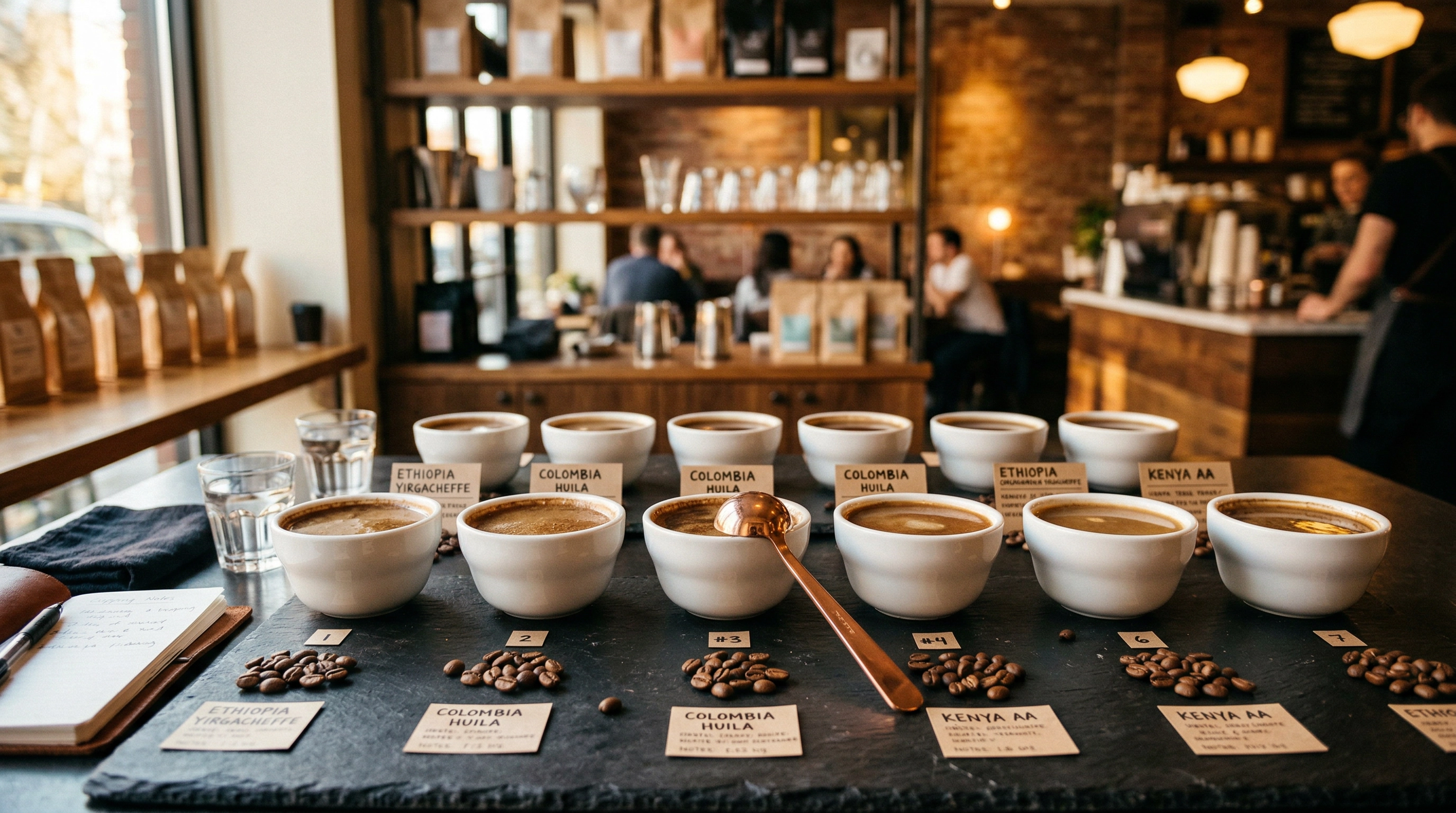
The Colombian coffee flavor profile is one of the most celebrated in the world — and one of the most misunderstood. Most people think "Colombian coffee" means one thing: smooth, mild, maybe a little nutty. In reality, coffee from Colombia produces an astonishing range of flavors, from bright berry-forward cups in the south to rich, chocolatey brews in the north. The difference between a Huila and an Antioquia bean is as dramatic as the difference between a Pinot Noir and a Cabernet.
This guide breaks down every Colombian coffee flavor profile by region, variety, roast level, and processing method — so you know exactly what to expect before your next bag hits the grinder.
Quick Summary: Colombian coffee typically features a medium body, balanced acidity, and sweet notes of chocolate, caramel, and fruit. But the flavor varies dramatically by region: Huila delivers fruity brightness, Nariño offers floral complexity, Tolima brings caramel balance, and Antioquia is known for nutty sweetness. Colombia grows exclusively Arabica beans, and roughly 85% are washed processed — giving the coffee its signature clean, well-defined character.
What Makes Colombian Coffee Taste So Good?
Colombia is the world's third-largest coffee producer and the second-largest grower of Arabica beans. In the 2024/25 harvest year, the country produced 14.87 million 60-kg bags — the best output in nearly three decades.
But production volume alone doesn't explain why the Colombian coffee flavor profile is so consistently excellent. Here's what does:
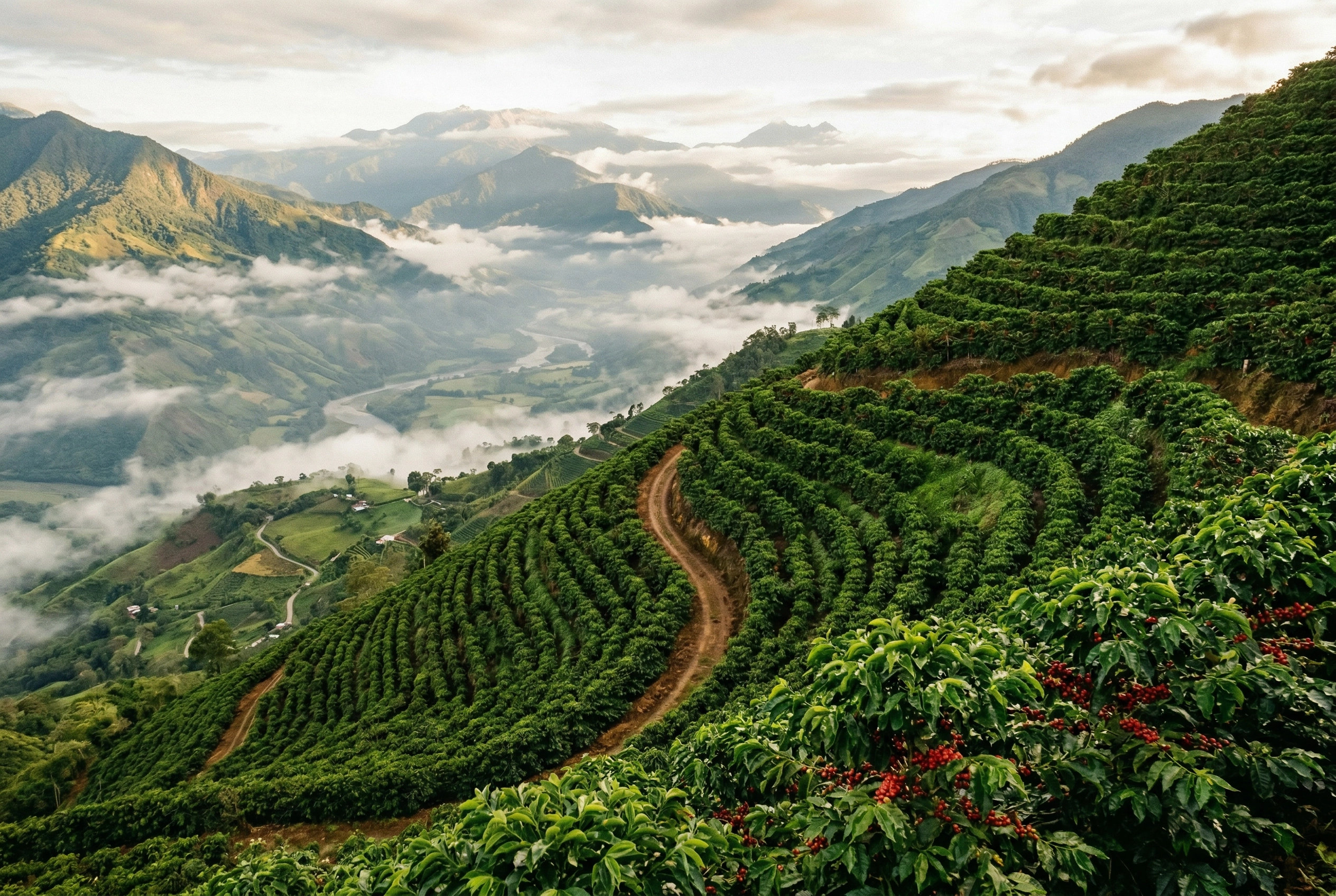
Geography and climate. Colombia sits right on the equator, and its Andes mountain range pushes coffee farms to altitudes between 1,000 and 2,300 meters above sea level. Higher altitude means cooler temperatures, which slow cherry maturation. Slower maturation lets the coffee fruit develop more complex sugars and aromatic compounds — the building blocks of great flavor.
Volcanic soil. Many of Colombia's growing regions sit on mineral-rich volcanic soil, which feeds the coffee plants nutrients that translate directly into cup complexity. Regions like Huila and Nariño are especially prized for this.
100% Arabica. Unlike Brazil or Vietnam, Colombia grows no Robusta. Every Colombian coffee bean is Arabica, which inherently produces smoother, more nuanced flavors with less bitterness.
Two harvest seasons. Colombia's equatorial position gives it a main harvest (October–February) and a secondary "mitaca" harvest (April–June) in many regions. Fresh beans are available almost year-round — unusual in the coffee world.
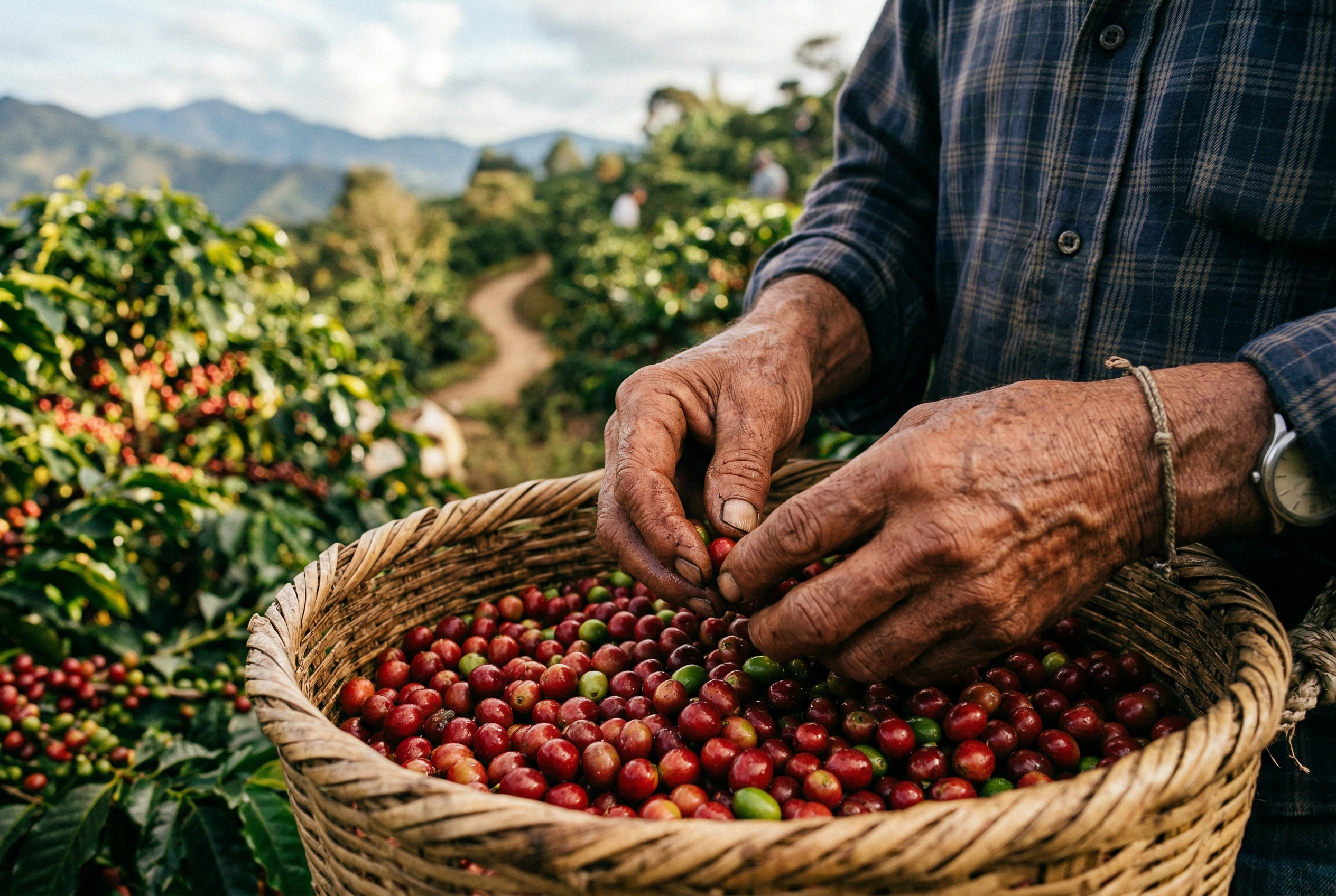
Hand-picking on small farms. Most Colombian coffee is grown on family farms averaging just 1.5 hectares. The steep Andean slopes make mechanical harvesting impossible, so farmers pick cherries by hand, selecting only ripe fruit. This selective harvesting is slow and expensive, but it dramatically improves quality in every cup.
Colombian Coffee Flavor Profile: The Basics
Before diving into regional differences, here's what most Colombian coffee beans have in common:
- Body: Medium — not thin and watery, not heavy and syrupy
- Acidity: Bright and clean, often described as citrus-like
- Sweetness: Pronounced, with caramel and brown sugar undertones
- Common tasting notes: Chocolate, caramel, nuts, citrus, red fruits
- Finish: Clean and pleasant, rarely bitter or ashy
Compared to other major origins, the Colombian coffee flavor profile sits in a sweet spot. Brazilian coffee tends toward nutty, low-acid, full-bodied cups. Ethiopian coffee leans fruity and floral with tea-like bodies. Colombian coffee offers the best of both worlds — enough acidity to be interesting, enough sweetness to be approachable, and enough body to feel satisfying.
If you're new to exploring coffee tasting notes, Colombian beans are the ideal starting point because of that balance. It's also why Colombian coffee beans are the backbone of so many commercial blends. But single-origin Colombian coffee? That's where things get really interesting.
For a broader comparison of how Colombia stacks up against other origins, see our coffee flavor profiles by origin guide.
Colombian Coffee Tasting Notes by Region
Colombia's coffee-growing regions span nearly the entire length of the country, from the Caribbean coast to the Ecuadorian border. Each region's unique combination of altitude, rainfall, temperature, and soil creates distinct Colombian coffee tasting notes — sometimes dramatically different from farms just a few hundred kilometers apart.
Huila: Fruity, Wine-Like, and Bright
Huila is Colombia's largest coffee-producing region, accounting for roughly 20% of national output. Located in the southwest, farms here range from 1,200 to 2,100 meters in altitude, with exceptionally fertile volcanic soils.
What it tastes like: Red fruits (strawberry, cherry), tropical fruits, caramel, and chocolate. The acidity is vibrant and wine-like — bright without being sharp. Body ranges from medium to full. These tasting notes make Huila beans some of the most sought-after Colombian coffee beans in the specialty market.
Huila producers regularly dominate Colombia's Cup of Excellence competitions, and the region earned its own Denomination of Origin certification in 2013. If you've tasted a standout Colombian single-origin, there's a good chance it came from Huila.
Best for: Coffee drinkers who enjoy fruity, complex cups with lively acidity.
Nariño: Citrus, Floral, and Complex
Nariño sits at Colombia's southern tip, bordering Ecuador. It's home to some of the highest coffee farms in the country — 1,500 to 2,300 meters — where extreme altitude creates extraordinary complexity in every bean.
What it tastes like: Vibrant citrus (lemon, orange), floral aromatics, tropical fruit, red berries, and caramel sweetness. The body is lighter than Huila, but the flavor intensity is remarkable. Nariño coffees often have a syrupy sweetness that surprises first-time tasters.
The proximity to the equator means unique sun exposure patterns, and the extreme altitude means cherries mature even more slowly than in other Colombian regions. The result? More concentrated sugars and aromatic compounds packed into each bean.
Most Nariño farms are small family plots, many under two hectares. This reduced scale allows meticulous care throughout the growing and processing cycle.
Best for: Specialty coffee enthusiasts seeking complex, high-acidity cups with floral and citrus notes.
Tolima: Caramel, Chocolate, and Balanced
Tolima occupies central Colombia at altitudes between 1,200 and 1,900 meters. It's the country's third-largest coffee-producing department and is gaining a reputation as an innovation hub.
What it tastes like: Stone fruits (peach, apricot), chocolate, caramel, and soft spices. The acidity is balanced rather than bright, the body is medium, and the sweetness is prominent. Think of Tolima as the "crowd-pleaser" of Colombian coffee regions.
In recent years, Tolima producers have been experimenting heavily with controlled fermentation and natural processing methods, creating more exotic Colombian coffee tasting notes alongside their traditional offerings.
Best for: Drinkers who prefer sweet, balanced cups without intense acidity.
Antioquia: Nutty, Sweet, and Silky
Antioquia — home to Medellín — represents Colombian coffee tradition. At 1,300 to 1,650 meters, it's slightly lower in altitude than the southern regions, which produces a different character entirely.
What it tastes like: Milk chocolate, almonds, caramel sweetness, and a silky, smooth body. The acidity is pleasant but moderate — never overwhelming. This is the Colombian coffee flavor profile many people picture when they think "classic Colombian."
Antioquia is Colombia's second-biggest producing region, with family estates that have grown coffee for generations. The well-distributed rainfall and stable temperatures create consistent crops year after year.
Best for: Anyone who loves nutty, chocolatey, easy-drinking coffee — especially great as espresso. If you enjoy approachable flavors, you might also like our picks for the best coffee for non-coffee drinkers.
Eje Cafetero (Coffee Axis): Classic, Balanced, and Smooth
The Eje Cafetero — Colombia's famous Coffee Triangle — encompasses the departments of Caldas, Quindío, and Risaralda. This region is a UNESCO World Heritage site and the heartland of Colombian coffee culture.
What it tastes like: Panela (raw sugar), caramel, chocolate, nuts, and hints of green apple. Dense body, medium acidity, and a clean, satisfying finish. If there's a "quintessential Colombian coffee," this is it.
The Eje Cafetero is also home to Cenicafé, Colombia's National Coffee Research Center, which developed disease-resistant varieties like Castillo and Colombia that now dominate the country's fields. It's also where the iconic Juan Valdez marketing campaign was born in 1958.
Best for: Those who want the classic, well-balanced Colombian coffee experience.
Bonus Regions: Cauca, Santander, and Sierra Nevada
Colombia has several other noteworthy coffee regions worth exploring:
Cauca (1,700–2,100m): Refined acidity, velvety body, tropical fruits, flowers, and a subtle minerality from volcanic soils. One of the oldest growing regions, with strong indigenous farming traditions. Accounts for roughly 10% of national production and has its own Denomination of Origin.
Santander (1,200–1,700m): Thought to be where coffee first arrived in Colombia. Lower altitude produces cups with less acidity but more body, featuring rich chocolate and tobacco notes. A distinctly different character from the southern regions.
Sierra Nevada de Santa Marta: The world's highest coastal mountain range, where indigenous Arhuaco and Kogi communities grow coffee using traditional organic methods. Expect nutty, dark chocolate, and hazelnut flavors with low acidity and a strong body. This region holds its own Denomination of Origin certification.
Region-by-Region Tasting Notes Comparison
Here's a side-by-side look at every major Colombian coffee flavor profile:
| Region | Altitude | Acidity | Body | Key Tasting Notes | Best For |
|---|---|---|---|---|---|
| Huila | 1,200–2,100m | Bright, vibrant | Medium-full | Red fruits, tropical fruit, caramel, chocolate | Fruity, complex cups |
| Nariño | 1,500–2,300m | Vibrant, complex | Light-medium | Citrus, floral, red berries, caramel | Specialty, high-acidity fans |
| Tolima | 1,200–1,900m | Balanced | Medium | Stone fruits, chocolate, caramel, spice | Sweet, balanced drinkers |
| Antioquia | 1,300–1,650m | Moderate | Medium, silky | Milk chocolate, almonds, caramel | Classic, nutty coffee lovers |
| Eje Cafetero | 1,200–2,000m | Medium | Dense | Panela, chocolate, nuts, green apple | The quintessential Colombian |
| Cauca | 1,700–2,100m | Refined | Velvety | Tropical fruit, flowers, minerality | Elegant, nuanced cups |
| Santander | 1,200–1,700m | Low | Full | Chocolate, tobacco | Bold, low-acid preferences |
| Sierra Nevada | 1,700m+ | Low | Strong | Hazelnut, dark chocolate | Rich, earthy drinkers |
Colombian Coffee Varieties and How They Taste
Colombian coffee is 100% Arabica, but "Arabica" is a species, not a single plant. Colombia grows several distinct varieties, each contributing its own flavor characteristics to the Colombian coffee flavor profile.
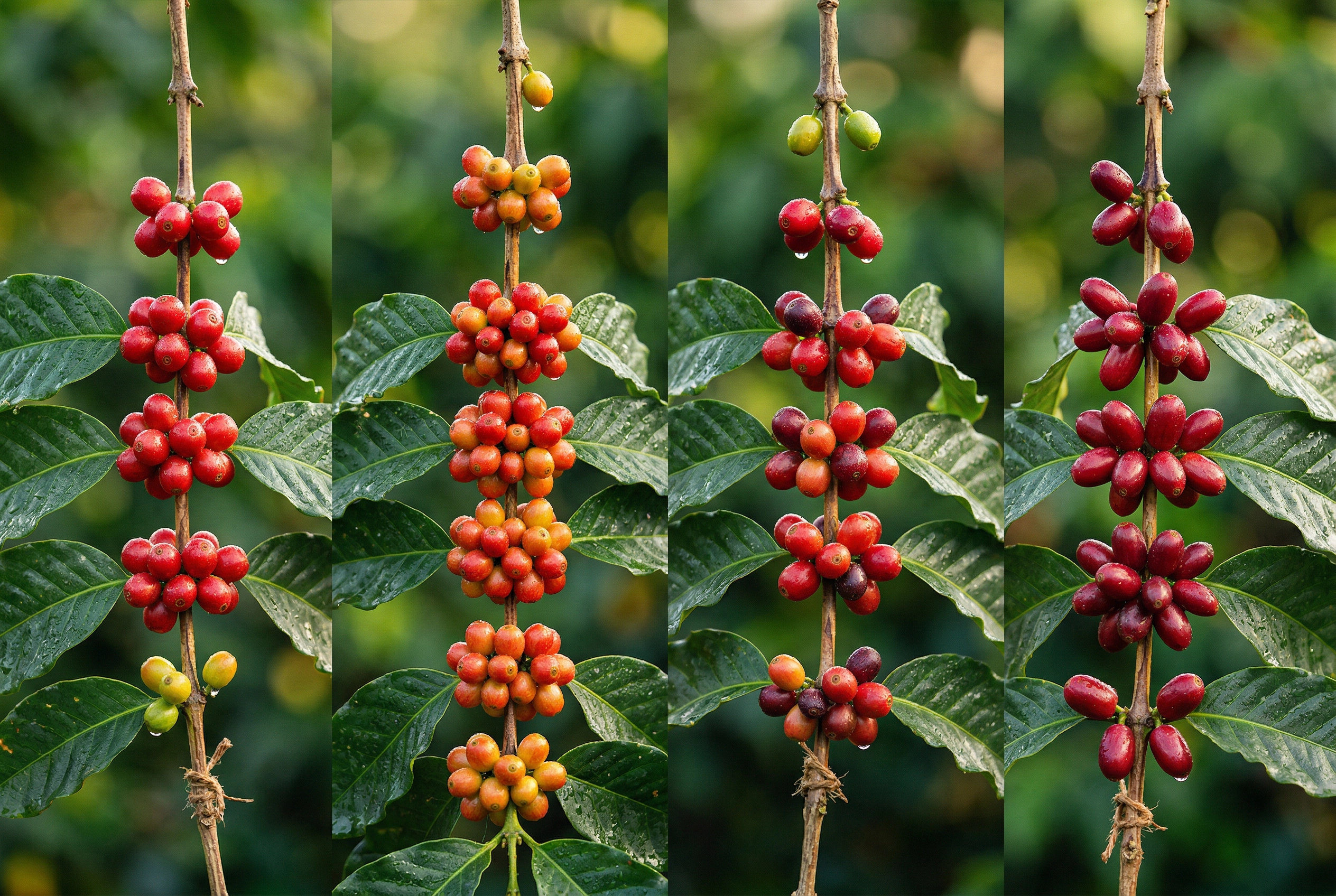
Caturra — A natural mutation of the Bourbon variety, first discovered in Brazil. Caturra produces cups with crisp acidity, citrus and floral notes, and a lighter body with excellent clarity. It was Colombia's dominant variety until 2008, when a government program began replacing it with disease-resistant alternatives. Caturra is still widely grown and beloved by specialty roasters for its clean, expressive flavor.
Castillo — Developed by Cenicafé by crossing Caturra with the Timor Hybrid, Castillo is now the most planted coffee variety in Colombia. It was created to resist coffee leaf rust (la roya), a disease that devastated Colombian crops starting in 2009. Castillo is smooth with citric acidity and performs well at light to medium roasts. The variety is somewhat controversial in specialty circles — some cuppers find it less complex than Caturra, while others argue it produces excellent results when grown at high altitude with care.
Typica — The original variety introduced to Colombia from Yemen and Ethiopia. Sweet, delicate, and classically flavored with chocolate, nuts, and citrus. Typica still represents about 25% of Colombian coffee trees, but its low yields and disease susceptibility mean it's gradually declining.
Colombia — Another Cenicafé-developed hybrid (released in 1982), similar to Castillo in its disease resistance. Widely planted and reliable.
Emerging varieties: Bourbon, Tabi, Geisha, and Sidra are increasingly found in Colombian specialty lots, particularly in Huila, Cauca, and Nariño. These tend to command premium prices at auction and offer unique, exotic tasting notes.
Processing Methods: How They Shape the Cup
How coffee cherries are processed after harvesting has an enormous impact on flavor — sometimes as much as the variety or region itself.
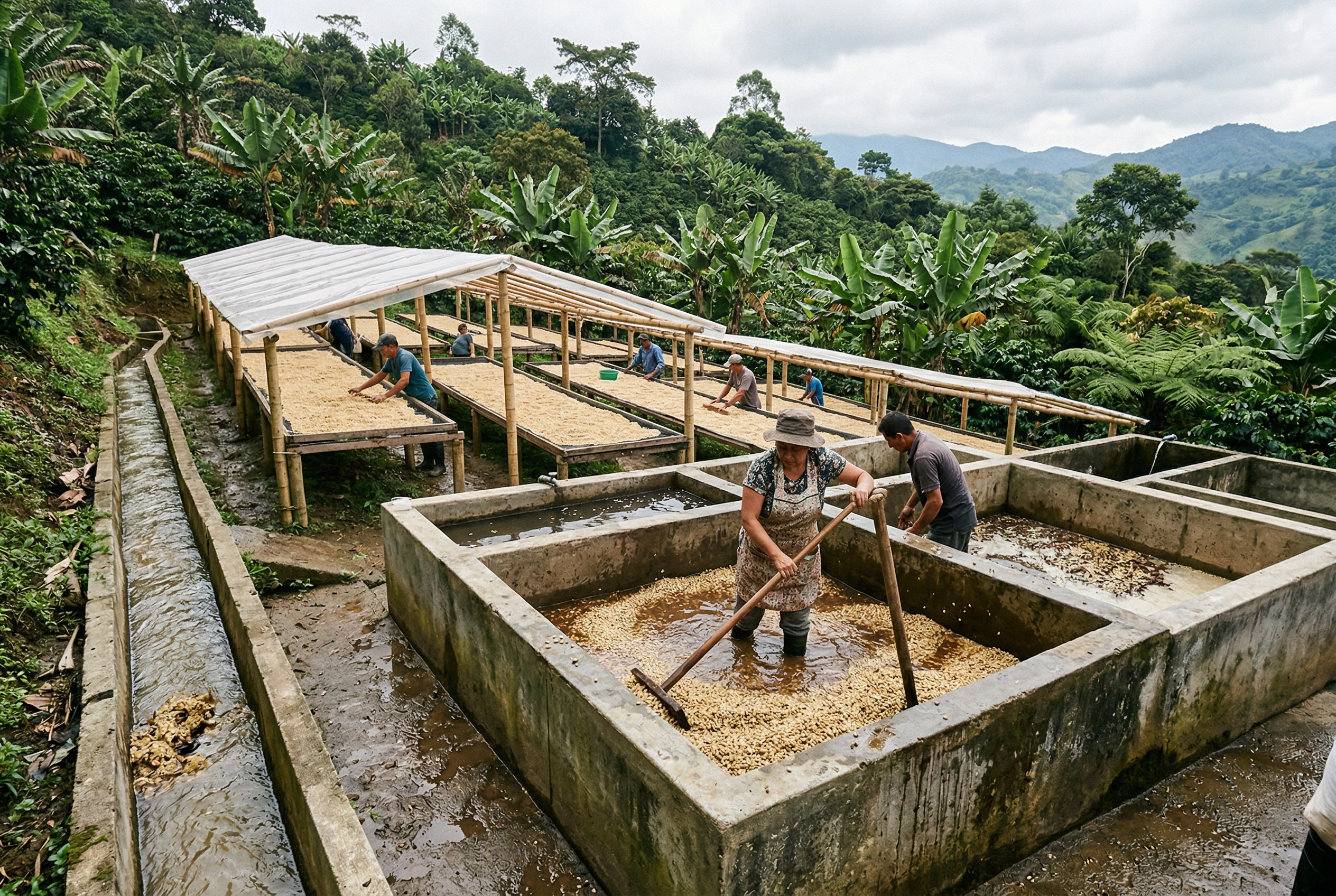
Washed (Wet) Processing — The Colombian Standard
Roughly 85% of Colombian coffee uses the washed method. Here's the process:
- Ripe cherries are mechanically depulped (skin and some mucilage removed)
- Beans ferment in water tanks for 12–36 hours, breaking down remaining mucilage
- Beans are washed with clean water
- Beans are dried on patios or raised beds until they reach 10–12% moisture
The result? A clean, bright cup where the bean's natural acidity and terroir characteristics shine through. Washed Colombian coffees are known for their clarity — you can taste the region, altitude, and variety distinctly. This is the processing method that gives Colombian coffee its signature clean finish.
Natural (Dry) Processing — The Rising Star
In natural processing, whole coffee cherries are sun-dried intact for 3–4 weeks. The fruit's sugars absorb into the bean during drying, producing cups with greater sweetness, fuller body, and intense fruity notes. Natural processing is gaining popularity in Huila and Tolima, where producers are creating limited-edition lots that fetch premium prices.
Honey Processing — The Middle Ground
Honey processing removes the cherry skin but keeps some or all of the sticky mucilage during drying. The result sits between washed and natural: more body and sweetness than washed, more clarity than natural. Variations include yellow honey (less mucilage), red honey, and black honey (most mucilage) — each producing progressively sweeter and more complex cups.
The trend to watch: Anaerobic fermentation, where beans ferment in sealed, oxygen-free tanks, is increasingly common in Colombian specialty coffee. Producers in Nariño and Huila are using this technique to create competition-winning lots with exotic flavor profiles.
Supremo vs. Excelso: Colombian Coffee Grading Explained
You'll see "Supremo" and "Excelso" on many bags of Colombian coffee. Here's what they actually mean — and what they don't.
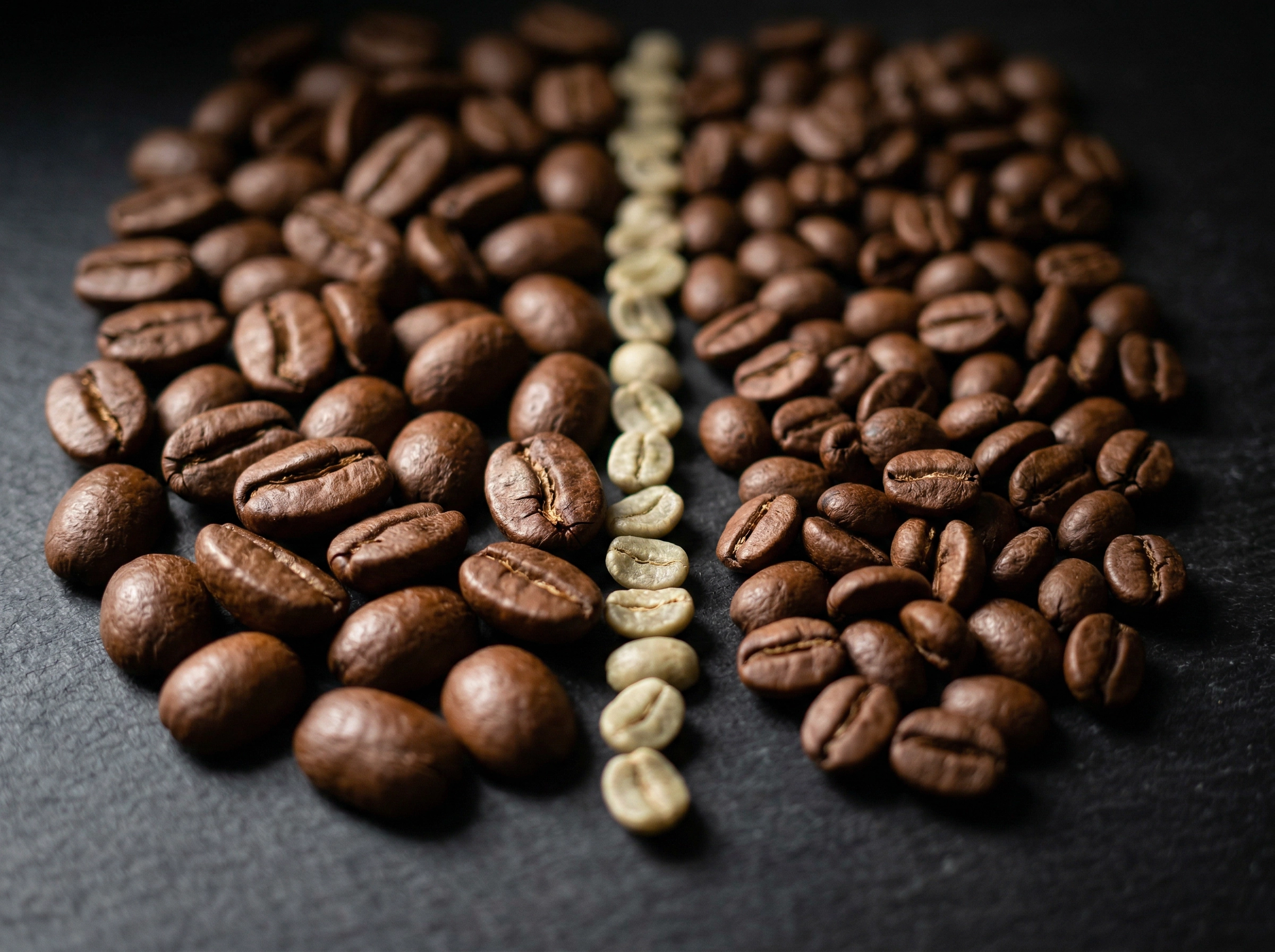
Both terms were created by Colombia's Federación Nacional de Cafeteros (FNC) and refer to bean size, not flavor quality:
- Supremo: Screen size 17/18 — the largest Colombian beans
- Excelso: Screen size 14–16 — slightly smaller, but still high quality
Here's the important part: Supremo and Excelso beans can literally come from the same tree. They're sorted by passing through different-sized sieves after harvesting. A Supremo bean and an Excelso bean from the same farm, same harvest, and same variety may taste nearly identical.
In fact, Perfect Daily Grind reported that smaller Excelso beans sometimes scored higher in professional cupping sessions than their larger Supremo counterparts, showing more complexity in the cup.
The takeaway: Don't pay a premium for "Supremo" thinking it automatically means better flavor. For specialty Colombian coffee, look at the SCA cupping score (80+ means specialty grade), the farm or region of origin, and the processing method instead. Those tell you far more about what's in the cup.
How Roast Level Changes Colombian Coffee's Character
The same Colombian beans can taste dramatically different depending on how they're roasted.
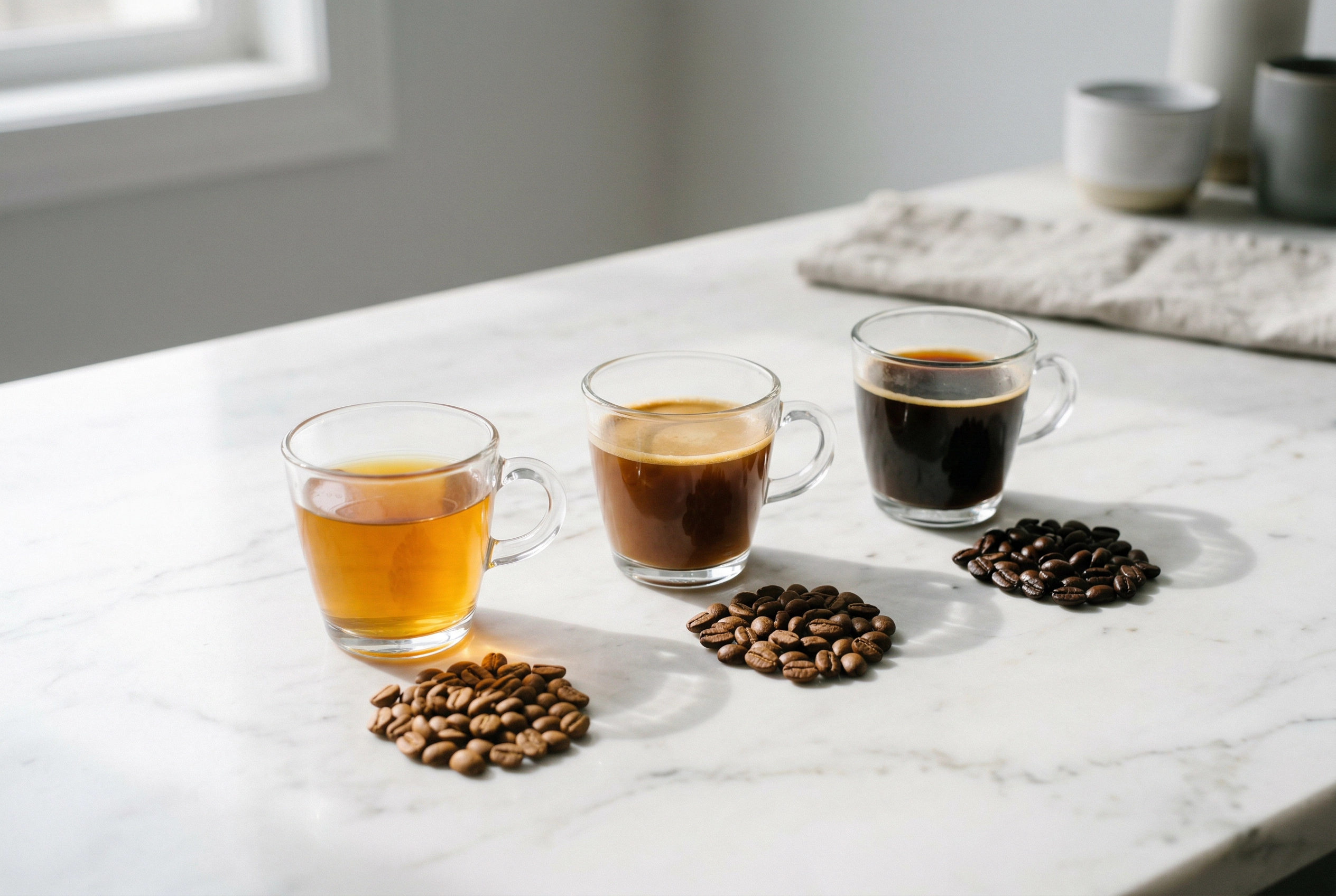
Light roast brings out delicate floral and fruity notes, with the brightest acidity and most origin character. If you want to taste what makes Nariño different from Antioquia, go light. You'll experience more of the bean's unique terroir, but the body will be thinner and the flavor more delicate.
Medium roast is the sweet spot for most Colombian beans. This is where you get caramel, milk chocolate, balanced acidity, and a satisfying body. Medium roast preserves enough origin character to be interesting while developing the sugars that make Colombian coffee so approachable. Most Colombian coffee you'll find at grocery stores and specialty shops is medium roasted.
Dark roast pushes flavors toward cocoa, gentle smokiness, and a fuller body, while reducing acidity. The trade-off is that heavy dark roasting can mask the nuanced regional differences that make Colombian coffee special. A dark-roasted Nariño and a dark-roasted Antioquia may taste more similar than different.
A good rule of thumb: Try beans from high-altitude southern regions (Huila, Nariño, Cauca) at lighter roasts to appreciate their complexity. For central and northern regions (Eje Cafetero, Antioquia), medium roasts tend to showcase their balanced, sweet character best.
How to Explore Colombian Coffee Flavors with Cafy
With so many regions, varieties, and processing methods, exploring Colombian coffee can feel overwhelming — especially when you're standing in a grocery store aisle staring at a dozen bags.
That's exactly what Cafy is built for. Scan any packaged Colombian coffee with your phone camera and instantly see its tasting notes, roast level, and flavor profile. No guesswork, no flipping the bag looking for tiny print.
You can:
- Compare Colombian coffees from different regions side by side
- Save your favorites to a personal collection so you remember what you loved
- Track what you've tried and build your own Colombian coffee journey
- Discover new options through curated collections like Bold & Strong or Smooth Sippers
If you want specific brand recommendations to start your exploration, check out our Colombian coffee brands roundup.
Frequently Asked Questions
What does Colombian coffee taste like?
Colombian coffee is typically medium-bodied with balanced acidity and sweet notes of chocolate, caramel, nuts, and fruit. The exact flavor depends on the growing region — southern regions like Huila and Nariño produce brighter, fruitier cups, while central regions like the Eje Cafetero deliver classic chocolate-and-caramel balance. For a broader look at how different origins compare, see our coffee flavor profiles by origin guide.
Is Colombian coffee stronger than other coffees?
"Stronger" depends on what you mean. Colombian coffee isn't higher in caffeine than other Arabica coffees — caffeine content is roughly similar across the species (about 1.2–1.5% by weight). If you mean bolder or more intense, it depends on the roast level and region. Dark-roasted Colombian beans from Santander or Sierra Nevada can be quite bold, while a light-roasted Nariño will taste bright and delicate. Colombian coffee is generally described as "balanced" rather than "strong."
What is the difference between Supremo and Excelso coffee?
Supremo and Excelso are size classifications, not quality grades. Supremo beans are larger (screen size 17/18) and Excelso beans are slightly smaller (screen size 14–16). They can come from the same farm and even the same tree — the only difference is which sieve they pass through during sorting. Smaller Excelso beans sometimes score higher in professional cupping sessions, so don't assume bigger means better.
Why is Colombian coffee so popular?
Several factors: Colombia grows only Arabica beans (naturally smoother and more flavorful than Robusta), its geography and climate create ideal growing conditions, most beans are hand-picked for quality, and the washed processing method produces a clean, approachable cup. Colombia's coffee federation (FNC) also invested heavily in marketing — the Juan Valdez campaign, launched in 1958, made Colombian coffee synonymous with premium quality worldwide.
Which Colombian coffee region has the best flavor?
There's no single "best" — it depends entirely on your preferences. If you love bright, fruity coffee, try Huila or Nariño. If you prefer nutty, chocolatey cups, go for Antioquia or the Eje Cafetero. For something balanced and sweet, Tolima is excellent. The comparison table above can help you match your taste to a region. And if you're unsure where to start, Cafy can help you scan and discover what you like.
Is all Colombian coffee Arabica?
Yes. Colombia exclusively produces Arabica coffee — it's one of the few major producing countries that grows no Robusta at all. Within Arabica, Colombia cultivates several varieties including Castillo (the most planted), Caturra, Typica, and Colombia. Each variety has slightly different flavor characteristics, but all share the smooth, nuanced qualities that Arabica is known for. To learn more about bean types, check out our guide to types of coffee beans.
Ready to discover your perfect coffee?
Download Cafy and scan any coffee to see tasting notes, roast levels, and more.
Download Free