What Is a Coffee Sommelier? Your Guide to Coffee Expertise
Learn what a coffee sommelier does, how they evaluate coffee through cupping, and how apps like Cafy put sommelier-level tasting notes in your pocket.
Ever grabbed a bag of coffee off the shelf and wondered what "bright acidity" or "stone fruit notes" actually means? Somewhere out there, a certified coffee sommelier knows exactly — and they spent years training their palate to tell you.
Quick Summary: A coffee sommelier (often called a Q Grader) is a certified professional who evaluates coffee quality through a rigorous tasting process called cupping. There are roughly 8,500 Q Graders worldwide, and their training takes months of preparation, costs around $2,000, and has a pass rate below 50%. You don't need that certification to understand your coffee, though. Apps like Cafy now deliver sommelier-level tasting notes, roast levels, and flavor profiles instantly — just by scanning a coffee package with your phone.
What Is a Coffee Sommelier?
A coffee sommelier is an expert trained to evaluate coffee the way a wine sommelier evaluates wine — by systematically analyzing aroma, flavor, body, acidity, and dozens of other characteristics.
The formal title in the specialty coffee world is Q Grader, a certification created by the Coffee Quality Institute (CQI) in partnership with the Specialty Coffee Association (SCA). The program launched in 2004, and since then, roughly 8,500 professionals across the world have become certified.
Here's what it takes to become a Q Grader:
- Six days of intensive training and testing in an SCA-certified laboratory
- 20 individual exams covering sensory evaluation, green coffee grading, and general knowledge
- ~$2,000 USD for the course and examination fees
- A pass rate estimated below 50% (CQI doesn't officially publish numbers)
- Certification is valid for just 36 months — then you recertify or lose the credential
On exam day, candidates can't wear perfume, use scented deodorant, or eat spicy food. Anything that interferes with your senses could cost you the certification.
That intensity is the point — Q Graders now serve as quality gatekeepers for the entire specialty coffee supply chain, from farms in Colombia to roasteries in Brooklyn.
How Sommeliers Evaluate Coffee
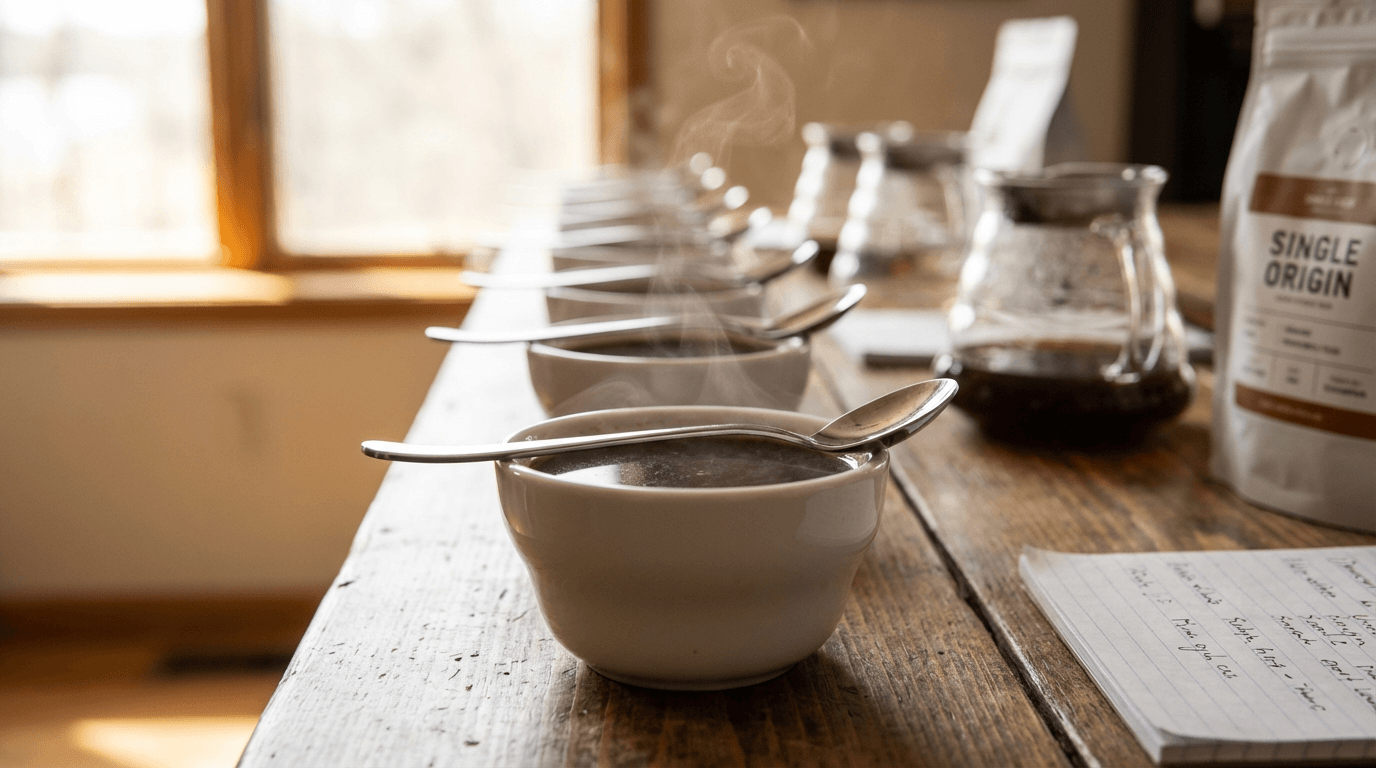
The primary tool of every coffee sommelier is cupping — a standardized tasting process used across the world to evaluate coffee quality. It's equal parts science and sensory expertise.
Here's how a professional cupping session works:
- Weigh and grind. Whole beans are weighed precisely (the SCA standard is 8.25 grams per 150ml of water) and ground medium-coarse.
- Smell the dry grounds. Before water touches the coffee, evaluators assess the dry fragrance — the first clue to what's inside.
- Add water and steep. Just-off-boil water is poured over the grounds. The coffee steeps untouched for four minutes.
- Break the crust. A layer of grounds forms a crust on top. At the four-minute mark, the evaluator breaks it with a spoon — releasing an intense burst of aroma. This is one of the most revealing moments in the process.
- Skim the surface. Remaining grounds are removed to leave a clean cup for tasting.
- Slurp. This is the signature move. Evaluators slurp coffee off a spoon forcefully, aerating it across the entire palate. It's loud, it's intentional, and it ensures every flavor register on the tongue gets activated.
- Score. Each coffee is scored on the SCA cupping form across multiple attributes, with a total possible score of 100. Any coffee scoring 80 or above qualifies as specialty grade.
Multiple cups of the same coffee are always tested side by side to check for uniformity — one great cup doesn't count if the next three are inconsistent.
The Nine Attributes Sommeliers Score
When a coffee sommelier evaluates a cup, they're not just deciding "good" or "bad." They score nine specific attributes that together reveal the complete quality profile:
| Attribute | What It Measures |
|---|---|
| Fragrance/Aroma | Smell of dry grounds (fragrance) and wet coffee (aroma) |
| Flavor | The overall taste impression — the big picture |
| Aftertaste | How long pleasant flavors linger after swallowing |
| Acidity | Brightness and liveliness — think citrus zing, not sourness |
| Body | Mouthfeel — thin and tea-like, or heavy and syrupy? |
| Sweetness | Natural sweetness present in the coffee |
| Balance | How well all attributes work together harmoniously |
| Uniformity | Consistency across multiple cups of the same coffee |
| Clean Cup | Absence of defects or off-flavors |
One thing that surprises most people: acidity is a positive quality in specialty coffee. A coffee with bright, citrusy acidity isn't "sour" — it's vibrant. Think of the difference between a flat glass of water and a crisp bite of green apple. That brightness is exactly what certified sommeliers look for.
Key Tasting Vocabulary Every Coffee Lover Should Know
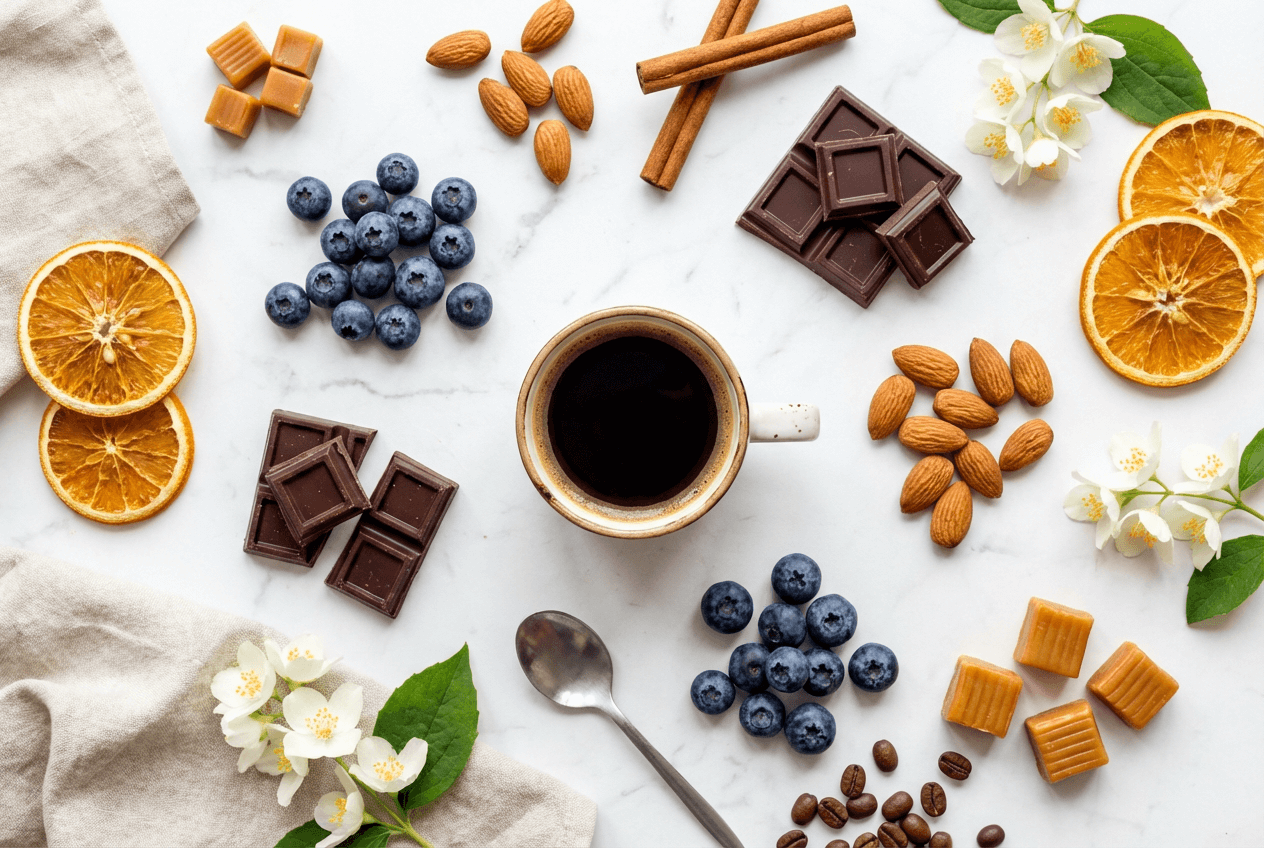
You've probably seen tasting notes on coffee bags — "dark chocolate, red berry, caramel" — and thought they sounded made up. They're not. They come from the SCA Coffee Taster's Flavor Wheel, the specialty coffee industry's standard vocabulary for describing what's in your cup.
Developed in 2016 by the SCA and World Coffee Research, the wheel organizes flavors in a hierarchy:
- Center ring: Broad categories like Fruity, Floral, Sweet, Nutty/Cocoa, Spices, Roasted
- Middle ring: Subcategories (e.g., Fruity → Berry, Citrus, Stone Fruit)
- Outer ring: Specific notes (e.g., Berry → Blueberry, Raspberry, Strawberry)
Here are common tasting terms and what they actually mean:
- Bright — High, pleasant acidity. Think lemon zest or crisp apple.
- Full-bodied — Heavy, rich mouthfeel. Often found in dark roast coffee.
- Fruity — Flavors reminiscent of specific fruits — berries, citrus, tropical.
- Nutty — Almond, walnut, or hazelnut undertones. Common in Brazilian coffees.
- Chocolatey — Cocoa or dark chocolate notes. Extremely common in medium and dark roasts.
- Floral — Jasmine, lavender, or rose-like aromatics. Typical of light-roasted Ethiopian coffees.
- Clean finish — Flavors that end crisply without lingering bitterness.
You don't need to memorize the whole wheel. Just start paying attention to whether your coffee leans fruity, nutty, or chocolatey — and you're already thinking like a coffee connoisseur.
Getting Sommelier-Level Insights Without the Training

Here's the reality: fewer than 8,500 people on the planet hold a Q Grader certification. That's roughly one certified sommelier for every million coffee drinkers. Most people will never have a coffee expert help them choose a bag at the grocery store.
Technology now closes that gap.
Cafy is a coffee scanning app that works like a digital coffee sommelier in your pocket. Point your iPhone camera at any packaged coffee, and you instantly get:
- Tasting notes — the same kind of flavor descriptors a Q Grader would identify
- Roast level — from light to dark, so you know exactly what to expect
- Flavor profile — a clear breakdown of the coffee's characteristics
Instead of spending months training your palate (or $2,000 on certification), you get expert-level coffee knowledge in seconds. Scanning a bag of coffee at the store takes less time than reading the back of the package.
Cafy also offers curated collections like Morning Boost, Bold & Strong, and Smooth Sippers — organized the way a sommelier might recommend coffees based on your preferences. You can save coffees you've tried, mark favorites, and build a personal coffee library over time.
Whether you're someone who's new to coffee or a coffee connoisseur exploring new options, it's the simplest way to make informed choices. There's a 3-day free trial to try it out.
The goal isn't to replace professional sommeliers — they do critical work ensuring quality across the coffee supply chain. The goal is to bring that same caliber of coffee expert advice to everyone who just wants to find a great bag of beans.
Frequently Asked Questions
What is the difference between a coffee sommelier and a Q Grader?
They're closely related. "Coffee sommelier" is a general term for a coffee expert with advanced tasting skills. "Q Grader" is the specific, formally recognized certification — administered by the Coffee Quality Institute and Specialty Coffee Association. All Q Graders are coffee sommeliers, but not everyone called a coffee sommelier necessarily holds the Q Grader certification.
How long does it take to become a coffee sommelier?
The Q Grader certification course itself takes six days. But most candidates prepare for months beforehand — cupping coffees regularly, training with scent kits like Le Nez du Café, and studying SCA materials. The full journey from beginner to certified Q Grader typically takes a year or more of dedicated practice.
Can you taste coffee like a sommelier at home?
Absolutely. Start by tasting coffees from different origins side by side — an Ethiopian next to a Colombian, for example. Pay attention to acidity, body, and sweetness. Use the SCA Flavor Wheel as a reference. You won't have the formal scoring precision of a certified Q Grader, but you'll develop a sharper palate with practice. Apps like Cafy also help by giving you tasting notes before you brew, so you know what flavors to look for in each cup.
What is coffee cupping?
Cupping is the standardized process professionals use to evaluate coffee quality. It involves grinding beans, steeping them in hot water, breaking the crust of grounds that forms on top, and slurping the coffee from a spoon to spread it across the palate. Each coffee is scored across attributes like aroma, acidity, body, and aftertaste on a 100-point scale.
Is there an app that helps identify coffee flavors?
Yes. Cafy lets you scan any packaged coffee with your iPhone camera to instantly see tasting notes, roast levels, and flavor profiles. It works like a pocket coffee sommelier — delivering the kind of detailed coffee tasting experience that normally requires professional expertise.
Ready to discover your perfect coffee?
Download Cafy and scan any coffee to see tasting notes, roast levels, and more.
Download Free