Coffee Flavor Wheel: What It Is & How to Use It
Learn how the SCA coffee flavor wheel maps every flavor in coffee. Step-by-step guide with tasting exercises to train your palate at home.
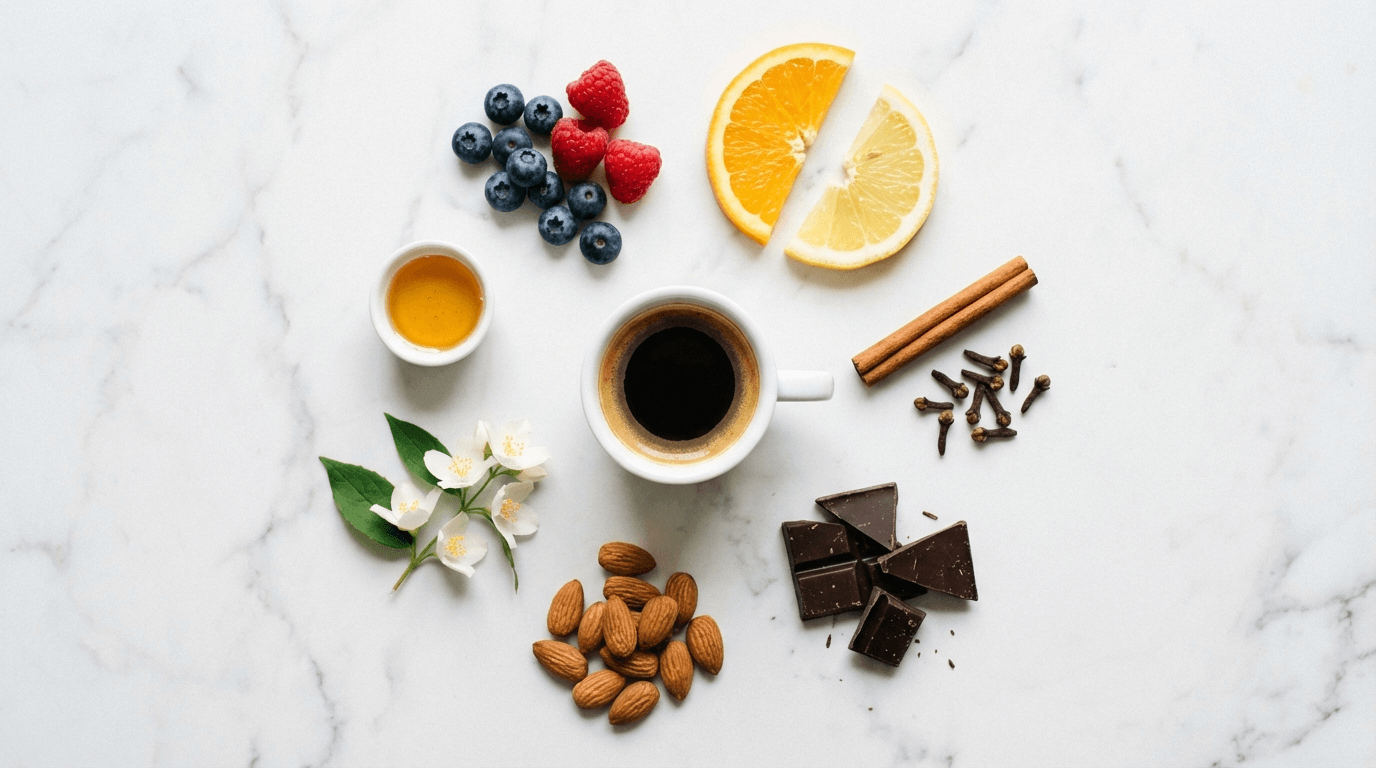
Ever picked up a bag of specialty coffee that promised "notes of blueberry, dark chocolate, and jasmine" and thought — how does a coffee bean taste like blueberry?
You're not alone. Those tasting notes aren't random marketing fluff. They come from one of the most important tools in the coffee world: the coffee flavor wheel.
Quick Summary: The coffee flavor wheel is a circular chart created by the Specialty Coffee Association (SCA) that maps every flavor you might taste in coffee — from fruity and floral to nutty, spicy, and even defect flavors. You read it from the center outward: start broad (is this fruity or nutty?), then narrow down to specific descriptors (blueberry? hazelnut?). Originally published in 1995 and completely rebuilt in 2016, it's the industry standard for describing what's in your cup.
What Is the Coffee Flavor Wheel?
The SCA Coffee Taster's Flavor Wheel is a circular diagram that organizes every identifiable flavor and aroma found in coffee. Created by the Specialty Coffee Association (SCA) in partnership with World Coffee Research (WCR), this flavor wheel serves one clear purpose: giving everyone — from professional cuppers to curious home brewers — a shared language to describe what they taste.
Think of it like a color wheel, but for your tongue and nose. Instead of "red" branching into "crimson" and "scarlet," you get "fruity" branching into "berry," which narrows further to "blueberry" or "raspberry."
The coffee taster's flavor wheel covers the full sensory spectrum. "Flavor" in coffee science means a combination of taste (what your tongue detects — sweet, sour, bitter, salty) and aroma (what your nose picks up). Most coffee flavors live somewhere in between, which is why the wheel includes everything from basic tastes to pure aromatics.
You don't need professional training to use the flavor wheel. If you can say "this coffee tastes kind of nutty," you're already using it — you just didn't know it yet.
A Brief History: From 1995 to 2016
The original coffee flavor wheel appeared in 1995, published by the Specialty Coffee Association of America (SCAA). It was a useful start for the specialty coffee industry, but it had problems.
The first version split into two sub-wheels — one for "Taints and Faults" and another for "Tastes and Aromas." Many of the terms were highly technical: words like "carvacrol" and "cineolic" that meant nothing to most coffee professionals, let alone everyday coffee drinkers. Common flavors that tasters actually detected — like strawberry, blueberry, or jackfruit — weren't on there at all.
By 2010, the specialty coffee industry had changed dramatically. Coffee quality had improved, palates had refined, and that 15-year-old coffee taster's flavor wheel couldn't keep up.
So the SCA started over from scratch.
In 2016, the SCA partnered with World Coffee Research to build a completely new coffee taster's flavor wheel. The foundation? The WCR Sensory Lexicon — the largest collaborative research project on coffee flavor ever completed. Here's what went into it:
- Kansas State University's Sensory Analysis Center led the research
- Professional sensory panelists spent over 100 hours evaluating 105 coffee samples from 13 countries
- They identified 110 distinct flavor attributes, each with a precise definition, an intensity rating (1–15 scale), and a specific real-world reference
- 72 coffee experts at UC Davis then sorted these attributes using statistical methods (hierarchical clustering and multidimensional scaling) to determine which flavors belong near each other on the wheel
- The London-based creative agency One Darnley Road designed the final visual
The result is the flavor wheel you see hanging in roasteries and cafés worldwide today. It's licensed under Creative Commons (non-commercial use), and a portion of every poster sold supports ongoing WCR research.
How the Coffee Flavor Wheel Is Organized
The coffee flavor wheel works like a target — you start at the bullseye and move outward. Each ring adds specificity, helping the coffee taster zero in on exactly what they're experiencing.
Inner ring (center): Nine broad categories that capture the major flavor families found in coffee:
- Fruity
- Floral
- Sweet
- Nutty/Cocoa
- Spices
- Roasted
- Green/Vegetative
- Sour/Fermented
- Other (defects)
Middle ring: Subcategories that break each family down further. "Fruity" splits into berry, citrus, dried fruit, and stone fruit. "Nutty/Cocoa" divides into specific nut types and chocolate notes.
Outer ring: Specific descriptors — the most precise terms on the flavor wheel. This is where the coffee taster lands on "blueberry" instead of just "berry," or "cinnamon" instead of just "spices."
Two design details that most people miss:
The gaps matter. Look closely and you'll notice some flavor cells touch each other while others have space between them. Connected cells mean professional tasters considered those flavors closely related. Gaps mean they're less related. The further a gap extends toward the center, the more distinct those flavors are from each other.
The colors are intentional. The SCA mapped colors to match flavor associations — red and purple tones for berry flavors, yellows and oranges for citrus, browns for nutty and roasted notes. If you taste "something red-ish" but can't name it, scan the red-colored sections of the wheel. It sounds strange, but our visual sense is deeply connected to taste perception.
The Main Flavor Categories Explained
Let's walk through each major category on the coffee flavor wheel so you know what each tasting note actually means — and what to look for in your next cup of coffee.
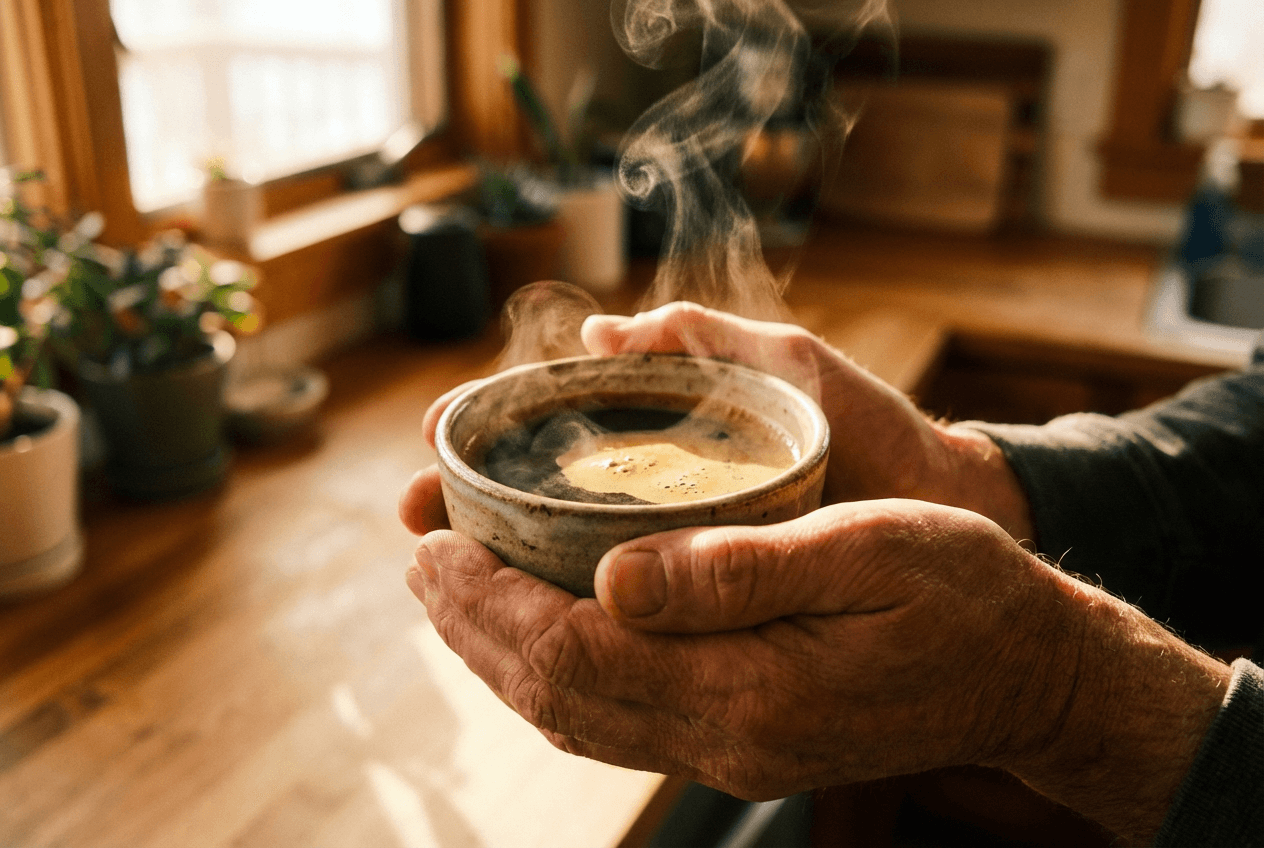
Fruity
The largest section of the flavor wheel, and one of the most exciting for specialty coffee lovers.
- Berry: Strawberry, raspberry, blackberry, blueberry — often found in naturally processed Ethiopian coffees. That "blueberry bomb" everyone talks about? This is the category on the wheel.
- Citrus: Orange, lemon, lime, grapefruit — bright, zesty acidity. Common in Kenyan and some Central American coffees.
- Dried fruit: Raisin, prune, fig — deeper, concentrated sweetness. Often shows up in aged or naturally processed beans.
- Stone fruit: Peach, nectarine, apricot — softer, rounded sweetness with mild acidity.
Fruity flavors tend to be most prominent in lighter roasts, where the bean's origin character shines through rather than roast flavors dominating.
Floral
Delicate and aromatic, floral notes give coffee a tea-like elegance. Think jasmine, rose, lavender, and chamomile — all common tasting notes on the SCA flavor wheel.
Ethiopian coffees — particularly from Yirgacheffe and Sidamo — are famous for their floral character. If you've ever sipped a light-roast Ethiopian and thought it tasted more like tea than coffee, that's floral notes at work.
These flavors are subtle. You're more likely to detect them in the aroma (especially the fragrance of freshly ground coffee beans) than on your tongue.
Sweet
Sweetness in coffee isn't about adding sugar — it's a natural quality that comes from the bean's sugars caramelizing during roasting.
The flavor wheel breaks this category down into honey, maple syrup, molasses, brown sugar, vanilla, and caramel. These are foundational flavors that show up across many coffees, especially medium roasts where caramelization is balanced without being overpowered by dark-roast smokiness.
When a coffee bag says "notes of caramel and brown sugar," this is the section of the coffee tasting notes chart they're referencing.
Nutty / Cocoa
If you like your coffee to taste like... coffee (warm, comforting, rich), this is probably your category on the flavor wheel.
- Nuts: Almond, hazelnut, peanut, walnut — smooth, rounded, low-acidity flavors
- Cocoa: Milk chocolate, dark chocolate, cocoa powder — ranging from sweet to bittersweet
Brazilian coffees are the poster child here — they're known globally for nutty, chocolatey flavor profiles. Many Central American coffees (Guatemala, Honduras, Colombia) also land squarely in this zone, especially at medium roast levels.
This is the most approachable category for people new to specialty coffee. If you don't love bright, acidic coffees, look for beans described with nutty/cocoa tasting notes.
Spices
Warm, aromatic notes like cinnamon, clove, black pepper, and nutmeg. These flavors develop during roasting through Maillard reactions — the same chemical process that makes bread crust and seared steak taste so good.
Spice notes are common in Indonesian coffees (Sumatran and Sulawesi), Indian coffees, and some aged coffees. They add complexity and warmth to the cup, especially in medium-to-dark roasts.
Roasted
This category on the coffee flavor wheel covers the flavors created by the roasting process itself: tobacco, pipe tobacco, smoky, burnt, cereal, grain, and dark chocolate.
Light roasts will show very little of this category. As roasts get darker, these flavors intensify — sometimes pleasantly (a rich, tobacco-like depth) and sometimes not (burnt, ashy, carbon). There's a wide spectrum between "pleasantly smoky" and "this tastes like charcoal."
Green/Vegetative, Sour/Fermented, and Other
These categories on the coffee taster's flavor wheel include flavors that are usually (but not always) considered defects.
Green/Vegetative — hay-like, herb-like, under-ripe, peapod. Sometimes appears in underdeveloped roasts where the coffee beans didn't get enough heat to fully develop their flavors.
Sour/Fermented — winey, whiskey-like, overripe. This is nuanced territory. A subtle winey quality can be intentional and delicious (think natural-process coffees). But when it crosses into vinegar or rotting fruit, it's a defect caused by how the coffee was processed — usually over-fermentation during washing.
Other — papery, musty, chemical, rubber, petroleum, medicinal. These are almost always undesirable. They typically result from poor storage (stale, papery notes), contamination (chemical flavors), or mold exposure (musty, mildew). If you taste these in your coffee, it has a problem.
Defect flavors aren't fun to encounter, but recognizing them is just as valuable as identifying the good stuff. They help you understand why a coffee tastes off — and avoid buying it again.
How to Use the Coffee Flavor Wheel: A Step-by-Step Guide
Here's the practical part. You don't need cupping spoons or a Q-grader certificate. Any coffee taster — beginner or expert — just needs a cup of coffee, the flavor wheel (a printable version or a digital one), and a few minutes of focused attention.
Step 1: Brew mindfully. Make a cup of coffee however you normally would. But before you drink, pay attention to three stages:
- Fragrance — the smell of the dry, freshly ground coffee beans
- Aroma — what you smell when hot water hits the grounds
- Flavor — what you actually taste when you sip
These are three different sensory moments, and each can reveal different things about the coffee.
Step 2: Take a sip and find the center. Look at the flavor wheel's inner ring. What's the broadest impression? Does the coffee taste fruity? Sweet? Nutty? Roasted? Don't overthink it. Go with your gut.
Step 3: Move outward. Found "fruity"? Great. Now ask: is it citrusy? Berry-like? Dried fruit? Move to the middle ring. Still with you? Narrow further: is that citrus note more like lemon or grapefruit? You've now reached the outer ring of the flavor wheel.
Step 4: Go back to the center. Most coffees have more than one flavor. Return to the inner ring and start again. Maybe you also detect something sweet — caramel? Honey? Follow that trail outward too.
Step 5: Notice the neighbors. Can't decide between two descriptors? Check the gap between their cells on the wheel. If they're touching, the flavors are closely related — you might be tasting a blend of both. If there's a gap, they're more distinct, and one is likely more accurate.
Step 6: Trust yourself. There are genuinely no wrong answers here. Associative tasting is based on your personal database of flavors and memories. If a coffee reminds you of your grandmother's apple pie, that association is valid — even if "apple pie" isn't on the coffee flavor wheel.
Three Tasting Exercises to Train Your Palate at Home
Developing your palate isn't about having some genetic gift. It's a skill, and like any skill, it gets better with practice. Here are three exercises any coffee taster can do without specialty equipment.
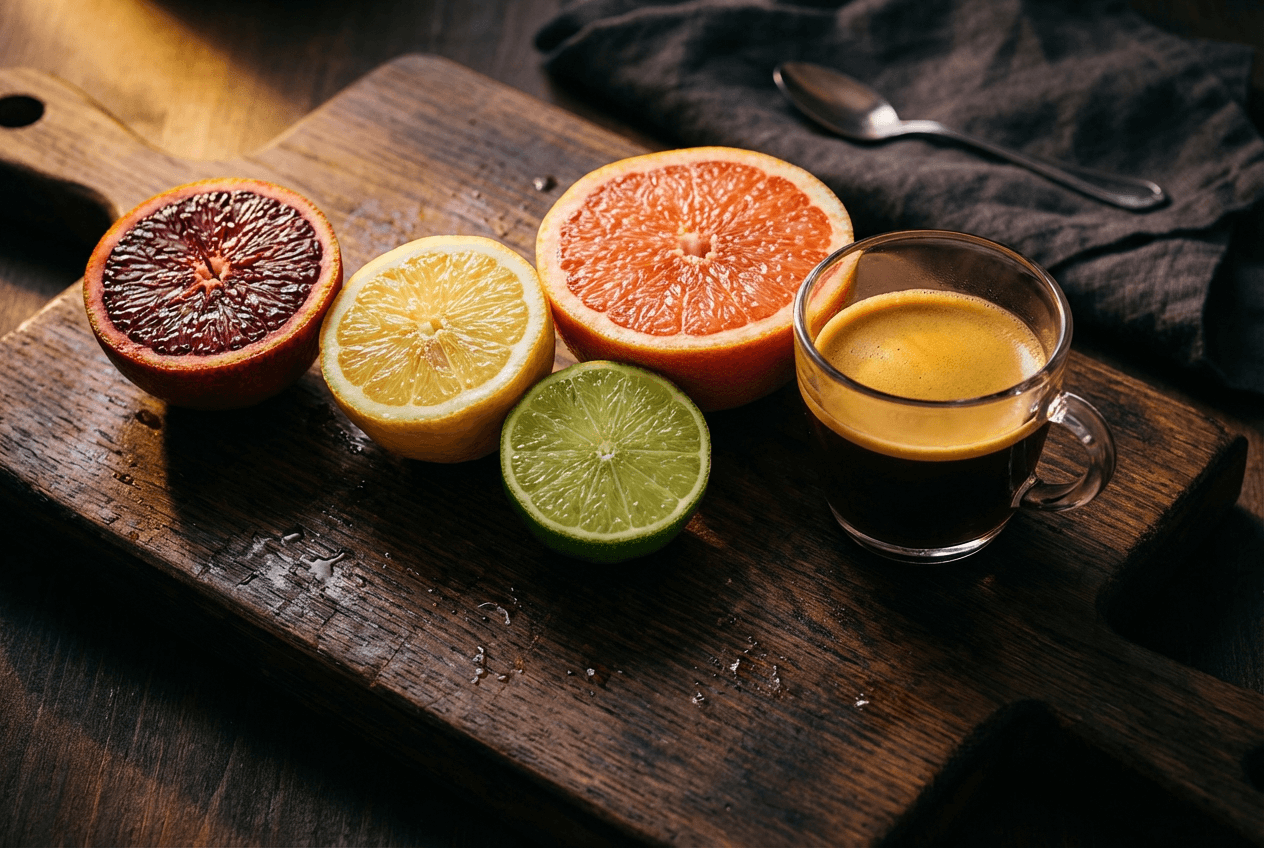
Exercise 1: The Citrus Lineup
Buy four citrus fruits: an orange, a lemon, a lime, and a grapefruit. Slice each one. Smell them individually, then taste them one by one.
Pay attention to the differences. Which is most sour? Which has the most sweetness behind the acidity? Which one lingers on your palate the longest?
Now brew a bright, light-roast coffee (Kenyan or Ethiopian works well). As you sip, ask: does the acidity remind me of any of those fruits? You're training your brain to connect "citric acid in coffee" with "citric acid in citrus fruit." This is exactly how the coffee flavor wheel works in practice.
Exercise 2: The Two-Cup Comparison

Buy two coffees from different origins — say, a Brazilian and an Ethiopian. Brew them the same way, using the same water temperature and ratio.
Taste them side by side. Write down (literally, on paper) what you notice about each one. Use the coffee flavor wheel as your reference. Which categories does each coffee fall into? Where do they overlap? Where do they diverge?
Side-by-side comparison is one of the fastest ways to develop your palate because contrast makes differences obvious. You might not notice "nutty" in isolation, but next to a fruity Ethiopian, the Brazilian's nuttiness jumps right out.
Exercise 3: The Pantry Sniff Test
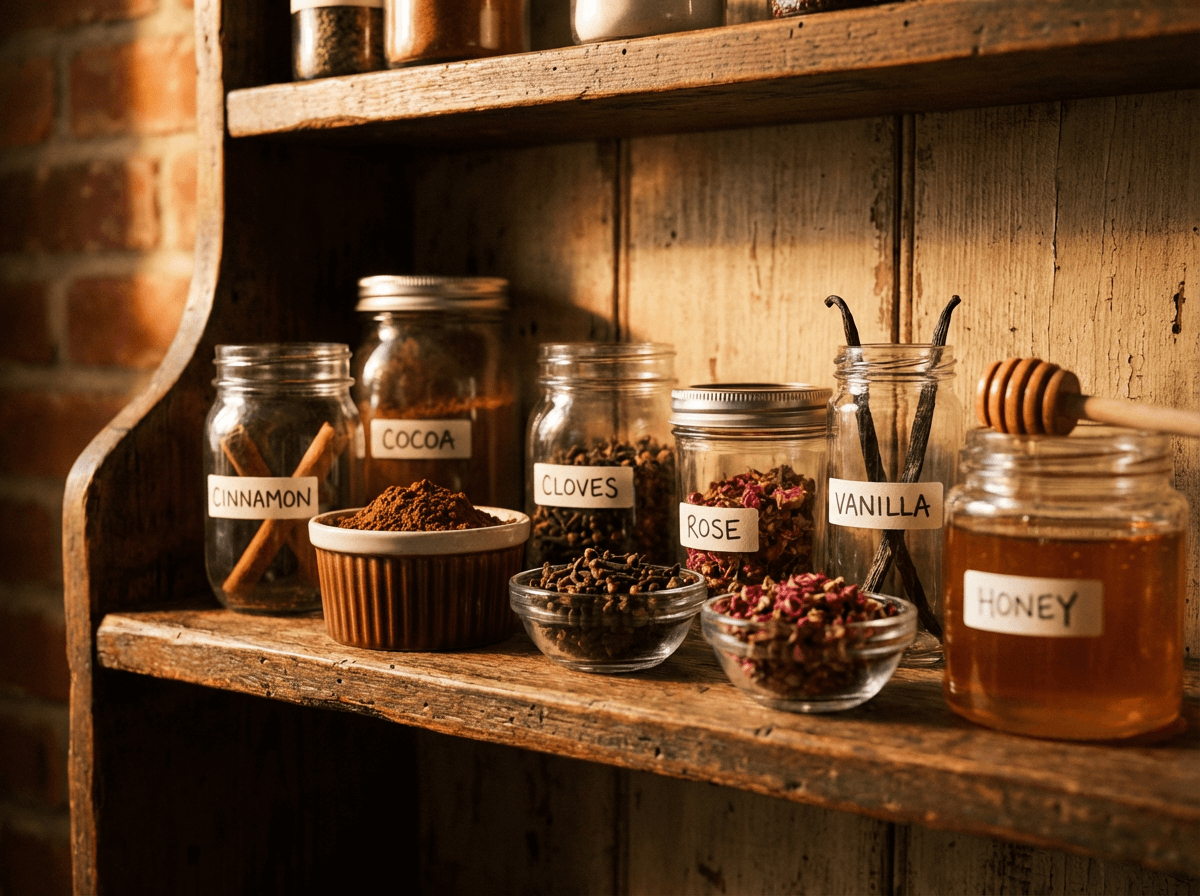
Open your kitchen cabinets and pull out: cinnamon, cocoa powder, honey, vanilla extract, dried herbs, black pepper, and any dried fruit you have. Smell each one deliberately, one at a time. Close your eyes. Focus on each aroma.
You're building scent memory — the same foundation professional coffee tasters use. The more familiar you are with these aromas in isolation, the easier it becomes to detect them when they appear as subtle notes in coffee. Professional cuppers do this with standardized reference kits, but your pantry works just fine for home training.
Do this before your morning coffee a few times, and you'll be surprised how quickly you start noticing flavor nuances you never could before.
What the Flavor Wheel Means for Your Coffee Bag
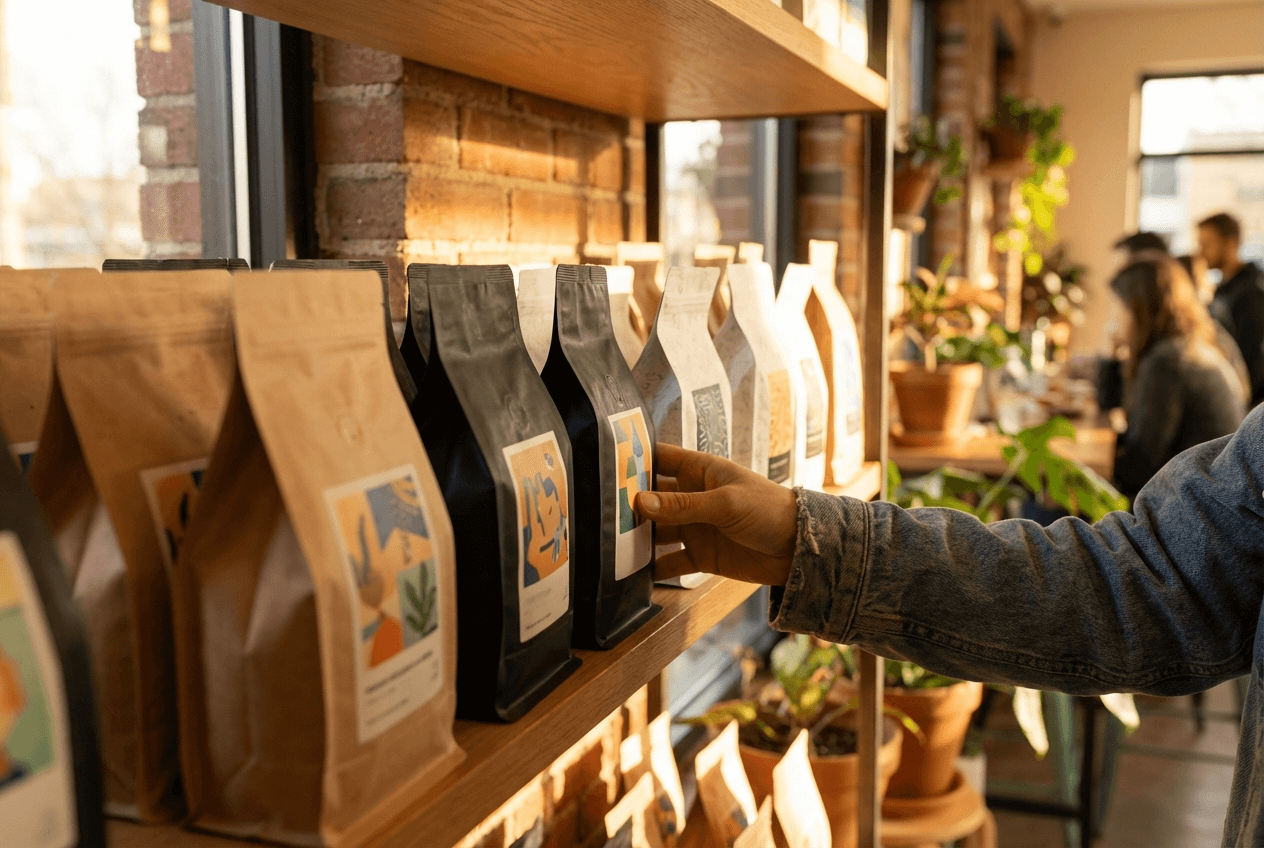
Those tasting notes printed on specialty coffee bags? They're drawn directly from the coffee flavor wheel's vocabulary. Understanding the wheel helps you decode them — and more importantly, helps you pick coffee you'll actually enjoy.
Here's the general pattern between roast level and the flavor wheel:
- Light roasts tend to highlight fruity, floral, and citrusy descriptors from the wheel. Think "notes of blueberry and jasmine."
- Medium roasts lean toward caramel, chocolate, nutty, and sweet descriptors. Think "notes of milk chocolate and hazelnut."
- Dark roasts emphasize roasted, smoky, spicy, and bittersweet notes. Think "notes of dark chocolate and tobacco."
This isn't a hard rule. Origin, altitude, variety, and processing method all influence a coffee's unique flavor profile. But roast level is the single biggest factor determining which section of the coffee tasting note wheel a coffee lands in.
The Flavor Wheel in Your Pocket
Memorizing 110 flavor attributes isn't realistic for most people — and honestly, it's not necessary. That's where technology helps.
Cafy lets you scan any packaged coffee with your phone camera and instantly see its flavor profile, tasting notes, and roast level. Instead of squinting at a poster on a café wall, you get the coffee flavor wheel's insights translated into plain language, right there in the grocery aisle.
It's like having a coffee sommelier who's memorized every descriptor on the coffee flavor profile wheel and can explain what each one means for this specific bag you're holding. Try it with a 3-day free trial and see how quickly it changes the way you shop for coffee.
Frequently Asked Questions
What is the SCA Coffee Taster's Flavor Wheel?
It's a circular chart published by the Specialty Coffee Association that maps every flavor and aroma found in coffee. Created in collaboration with World Coffee Research, it organizes 110 attributes from broad categories (fruity, sweet, roasted) to specific descriptors (blueberry, caramel, tobacco). Coffee professionals and enthusiasts worldwide use the coffee taster's flavor wheel as a shared vocabulary for describing what they taste in the cup.
How many flavors are on the coffee flavor wheel?
The 2016 version, based on the WCR Sensory Lexicon, includes 110 flavor and aroma attributes. These are organized across nine core categories in the inner ring, with subcategories in the middle ring and specific descriptors in the outer ring of the flavor wheel.
Do I need training to use the flavor wheel?
No. The coffee flavor wheel is designed to be intuitive — start at the center, identify a broad category, and work outward. Professional Q-graders train extensively with reference materials, but any coffee taster can use the wheel to put words to what they're already tasting. Start with the exercises in this guide and your skills will develop naturally.
Why does coffee taste like fruit or chocolate when it's just a bean?
Coffee contains over 1,000 volatile aromatic compounds — more than wine. Many of these compounds are identical to those found in fruits, chocolate, spices, and flowers. When you taste "blueberry" in a coffee, you're detecting some of the same chemical compounds present in actual blueberries. The coffee flavor wheel maps these naturally occurring compounds, not added flavors.
Where can I get the coffee flavor wheel?
The official SCA Coffee Taster's Flavor Wheel is available as a digital download (PDF, letter size) or large-format print from the SCA Store. Prices vary by format. A portion of every sale supports World Coffee Research. You can also explore interactive digital versions online that pair the flavor wheel with the WCR Sensory Lexicon's reference cards.
Ready to discover your perfect coffee?
Download Cafy and scan any coffee to see tasting notes, roast levels, and more.
Download Free