Best Coffee for Beginners: A Friendly Starting Guide
Find the best coffee for beginners with 3 clear paths: easy, exploratory, or all-in. Specific grocery store picks, starter kit checklist, and tips.
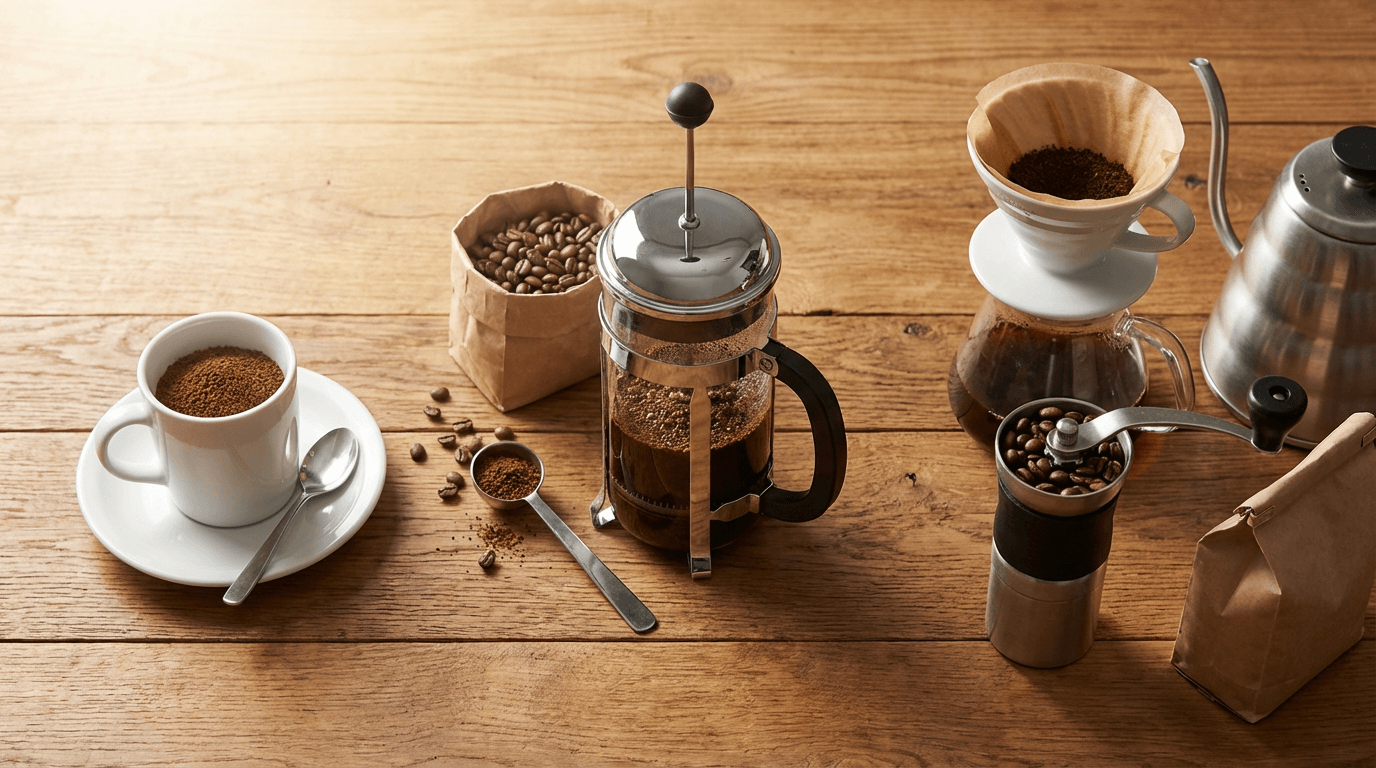
You want to get into coffee. Not because someone's forcing you — because you're genuinely curious. Maybe you're tired of ordering "whatever's easiest" at the café. Maybe you keep staring at the grocery store coffee aisle, overwhelmed by 47 different bags that all look the same.
Good news: finding the best coffee for beginners isn't complicated. You just need a starting point that matches your personality.
Quick Summary: Start with a medium roast — it's the most balanced and forgiving. Choose your format based on how much effort you want (instant, pods, pre-ground, or whole bean). Beginners tend to enjoy chocolate, caramel, and nutty flavor notes. Avoid very light roasts at first — they can taste fruity or sour, which throws off new coffee drinkers.
This guide gives you three clear paths based on your vibe: easy, exploratory, or all-in. Pick the one that sounds like you, grab a specific coffee we recommend, and you're off.
Note: If you're someone who actively doesn't like coffee and wants something that barely tastes like it, check out our guide to the best coffee for non-coffee drinkers. This guide is for people who are ready and motivated to start their coffee journey.
A Quick Coffee Cheat Sheet for Beginners
Before we get into recommendations, here's the 60-second version of what you need to know.
Roast levels determine how the coffee tastes more than almost anything else. The National Coffee Association's roast guide breaks it down into four main levels, but for beginners, three matter:
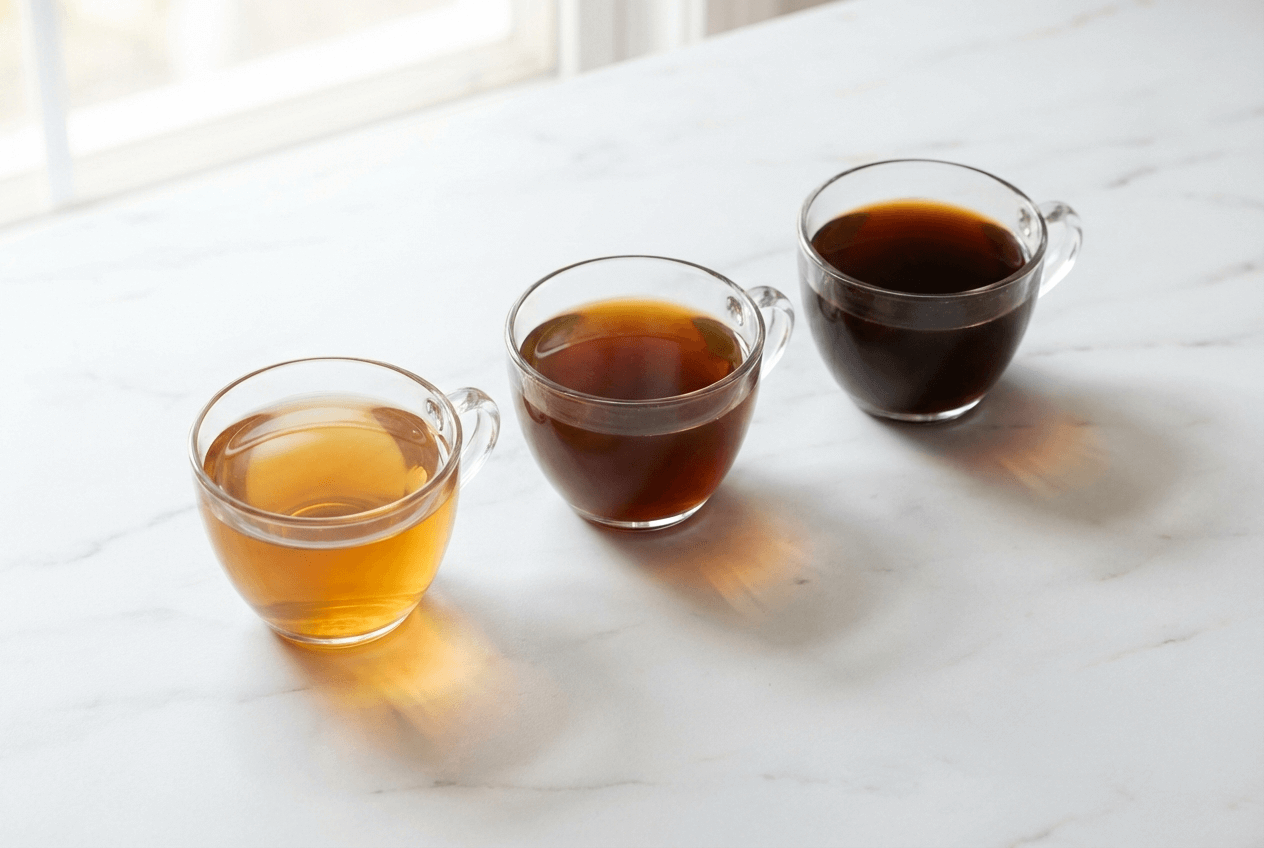
- Light roast — Bright, acidic, sometimes fruity or floral. Preserves the bean's original flavor. Can taste sour to beginners.
- Medium roast — Balanced, smooth, with notes of chocolate, caramel, and nuts. This is where most beginners should start.
- Dark roast — Bold, smoky, sometimes bitter. Strong flavor that can be overpowering if you're new to coffee.
The bean itself matters too. Coffee beans come from two main species: Arabica and Robusta. Arabica beans (about 60-70% of global production) are smoother, sweeter, and less bitter. Robusta has nearly twice the caffeine and a harsher taste. As a beginner, look for "100% Arabica" on the bag.
Flavors most beginners enjoy: Chocolate, caramel, brown sugar, hazelnut, vanilla, and toasted nuts. These are the warm, sweet, familiar notes that make coffee feel approachable.
Flavors to approach slowly: Fruity, floral, citrusy, or wine-like notes. These come from light-roasted specialty beans and can confuse a new palate. They're not bad — they're just not where most people want to start.
Path 1: "I Just Want Good Coffee, Easy"
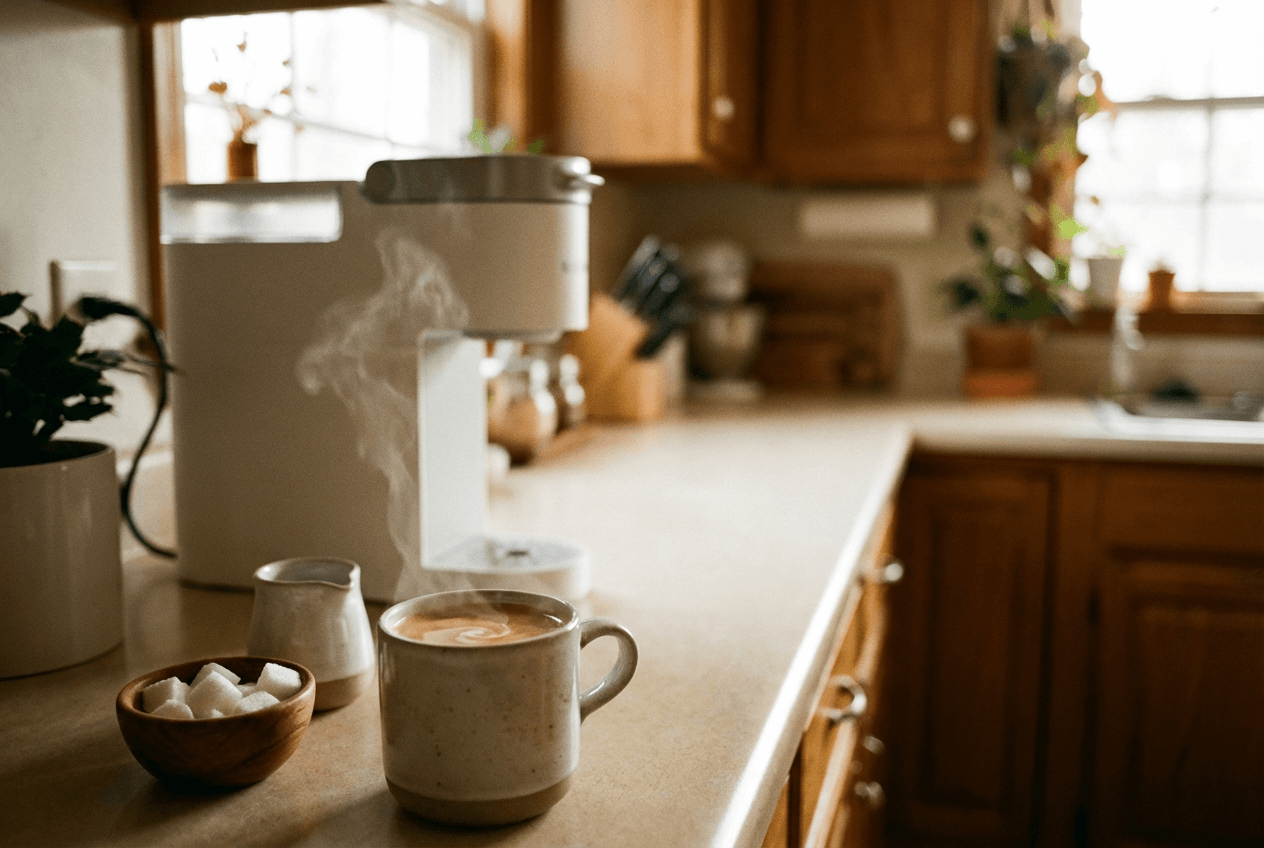
This path is for you if: You're busy, you don't want to buy equipment, and you just want a decent cup without a learning curve. No judgment — modern instant coffee, pre-ground options, and pods have gotten genuinely good.
Here's the deal: the "best" beginner coffee is the one you actually brew and enjoy. A $25 bag of specialty beans sitting in your cabinet unused is worse than a $6 jar of instant that starts your morning right.
Best Easy Coffees to Start With
Nescafé Gold (Instant) This is the instant coffee that changed a lot of people's minds about instant coffee. It's smooth, has subtle caramel and toffee notes, and dissolves cleanly in hot water. Keep a jar at your desk or in your kitchen for zero-effort mornings. About $8-10 for 100g.
Folgers Classic Roast (Pre-Ground) America's best-selling coffee exists for a reason: it's consistent, affordable, and genuinely smooth for a pre-ground medium roast. Works in any drip coffee maker. You'll find it in literally every grocery store for around $8-12.
Green Mountain Nantucket Blend K-Cups (Pods) If you have a Keurig or similar pod machine, these are a sweet spot. Medium roast, balanced, no bitterness — just easy coffee that tastes like coffee should. About $12-15 for a 24-pack.
Beginner tip: If black coffee feels too intense, add a splash of milk or cream. There's zero shame in this. Even longtime coffee drinkers do it. A little whole milk rounds off the bitterness and brings out the sweeter notes. You could also try adding a dash of cinnamon or vanilla extract for natural sweetness without sugar.
Path 2: "I Want to Explore"
This path is for you if: You're willing to put in a tiny bit more effort for noticeably better flavor. You might buy a basic coffee grinder, try beans from different countries, and start noticing the difference between a Brazilian coffee and a Colombian one.
This is where coffee goes from a caffeine delivery system to something you actually look forward to tasting each morning.
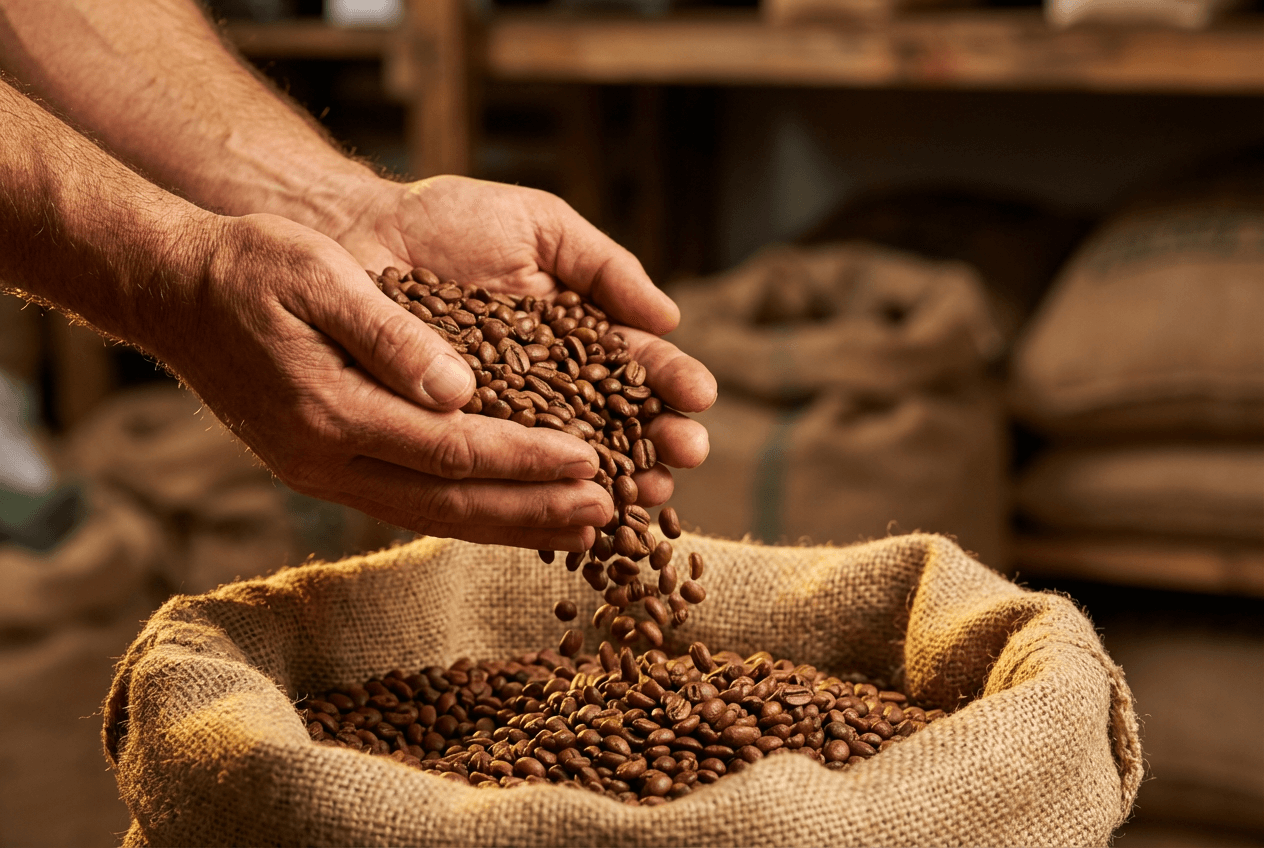
The key here: buy whole bean coffee and grind it yourself. Pre-ground coffee starts losing flavor within minutes of grinding. Whole beans stay fresh for 2-4 weeks after roasting. Even a $20 burr grinder makes a real difference in your brew quality.
Best Coffees for Curious Beginners
Caribou Coffee Caribou Blend (Whole Bean, Medium Roast) Sweet berry undertones with a smooth chocolate finish. This is a great "training wheels" whole bean coffee — approachable but more interesting than pre-ground. Try brewing it in a French press to taste the full body. Available at most major grocery stores for $10-13.
La Colombe Corsica (Whole Bean, Medium-Dark) A step bolder. This blend mixes beans from Brazil and Colombia with others for complex chocolate and baking spice notes. It's rich without being bitter and works beautifully in a drip maker or French press. Around $12-14 at Whole Foods, Target, and most supermarkets.
Peet's Big Bang (Whole Bean, Medium Roast) Peet's blends beans from multiple origins into something bright but balanced — you'll taste caramel and citrus notes without any sourness. A nice bridge between simple and specialty coffee. About $11-13.
Explorer's tip: Try a different origin or brand every two weeks. Keep notes (even just "liked it" or "too bitter") so you can start spotting your own patterns. You'll be surprised how quickly your taste develops.
Path 3: "I Want the Best"
This path is for you if: You want to start at the top. You've heard about specialty coffee, third-wave roasters, and single-origin beans, and you're ready to jump in.
Specialty coffee is graded by the Specialty Coffee Association on a 100-point scale. Anything scoring 80 or above qualifies as "specialty" — meaning exceptional quality, traceable sourcing, and distinct flavor characteristics.
Fair warning: specialty light roasts can taste wildly different from what most people think of as "coffee." Expect bright acidity, fruit flavors, and floral aromas. It's not for everyone immediately, but if you're the type who loves exploring wine, craft beer, or artisanal food — you'll probably love this.
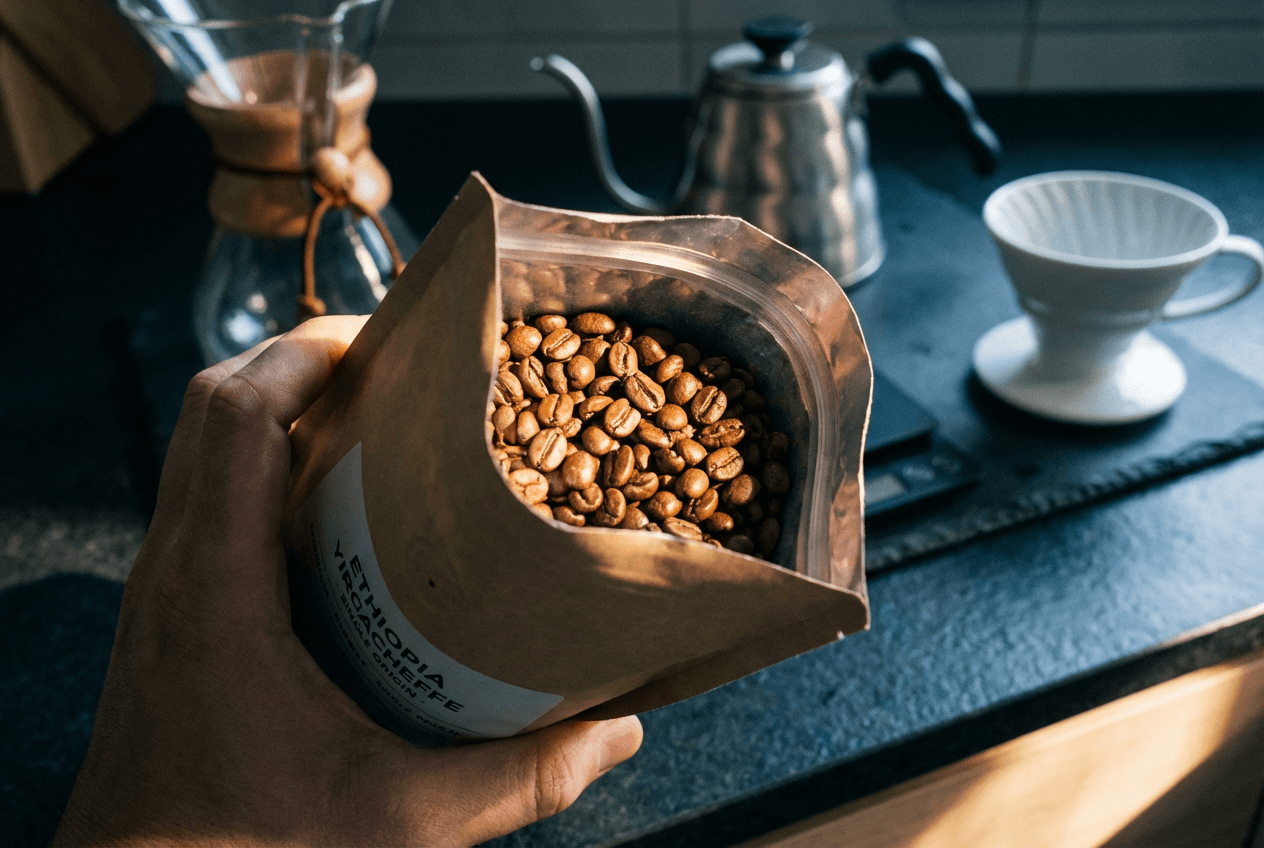
Best Specialty Coffees for Ambitious Beginners
Counter Culture Hologram (Whole Bean, Medium-Light) One of the most accessible specialty coffees in the U.S. Available at Whole Foods and many grocery stores. Tasting notes of chocolate, caramel, and a hint of berry. It's specialty coffee that doesn't scare beginners away. About $13-16.
Stumptown Hair Bender (Whole Bean, Medium) A Portland favorite that shows up in grocery stores nationwide. Complex flavor — sweet citrus, dark chocolate, and a hint of raisin. It works in every brew method and consistently ranks among the best nationally available specialty blends. Around $15-17.
Intelligentsia Frequency Blend (Whole Bean, Medium) Chicago-based Intelligentsia designed this blend specifically to be an everyday drinker. Sweet, smooth, with chocolate and caramel notes. It's specialty coffee that feels familiar, not intimidating. About $15-17.
Ambitious beginner tip: These coffees are meant to be tasted, not just chugged. Try them black first — even just a sip — before adding milk. You might surprise yourself.
Your Beginner Coffee Starter Kit
Here's everything you actually need to start brewing good coffee at home. Nothing more.
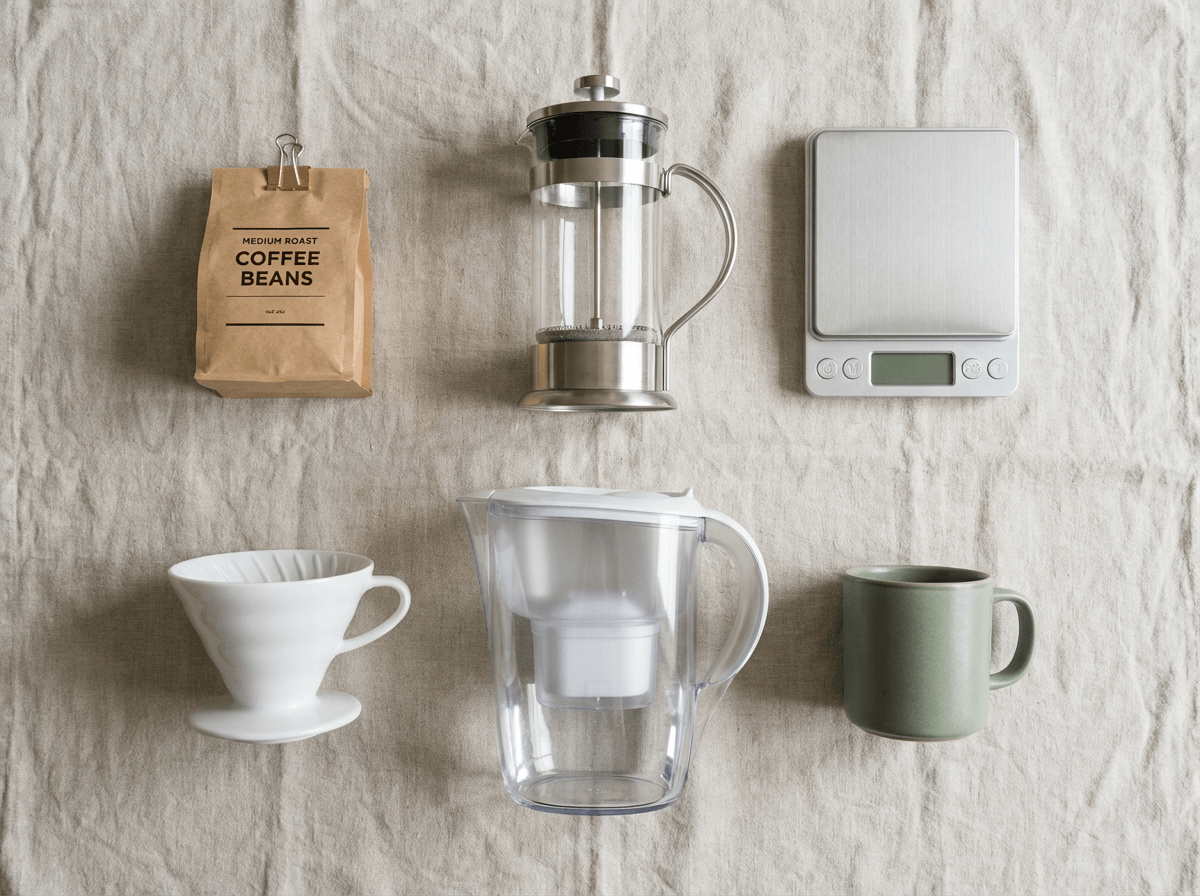
Must-Haves (Under $25 Total)
- ☐ One bag of medium roast coffee — Pick from any path above. Start with one bag, not five.
- ☐ A way to brew it — Drip coffee maker, French press ($15-25), or pod machine. Use what you already have.
- ☐ Filtered water — Sounds fussy, but coffee is 98% water. A basic Brita pitcher improves taste noticeably.
- ☐ A mug you like — Seriously. Enjoying the ritual matters.
Nice-to-Haves (When You're Ready)
- ☐ A burr grinder ($20-40) — For whole bean coffee. Blade grinders work but produce uneven grinds.
- ☐ A kitchen scale ($10-15) — For consistent cups. The "golden ratio" is about 1 gram of coffee per 15 grams of water.
- ☐ An airtight container ($10-15) — Keep beans fresh longer. Mason jars work in a pinch.
Don't Need Yet
- ❌ An espresso machine (expensive and requires serious skill to use well)
- ❌ A gooseneck kettle (nice but not necessary until pour-over)
- ❌ A coffee subscription (explore grocery store options first)
5 Mistakes Every Coffee Beginner Makes
1. Using boiling water. Water straight off the boil (212°F) scorches coffee and makes it taste bitter and burnt. Let it cool for 30-60 seconds after boiling. You're aiming for 195-205°F — hot but not volcanic.
2. Buying a huge bag. Coffee goes stale. A 12oz bag is perfect for one person brewing a cup a day. Buy smaller, buy more often. Check for a "roasted on" date and try to use beans within 3-4 weeks.
3. Starting with dark roast because "strong = good." Dark roast means bolder flavor, not more caffeine. (Light roasts actually have slightly more caffeine per scoop.) Dark roasts can taste smoky and bitter to new drinkers. Start medium, and work your way in either direction.
4. Giving up after one bad cup. One bad cup doesn't mean you don't like coffee. It might mean the coffee was stale, the water was too hot, or the ratio was off. Give any new coffee at least three attempts before writing it off.
5. Feeling guilty about milk and sugar. Add whatever you want. Cream, milk, sugar, honey, flavored syrup — it's all fine. The goal is to enjoy your cup of coffee. Your palate will naturally evolve over time, and you might eventually prefer less (or more). There are no rules here.
How to Figure Out What You Actually Like
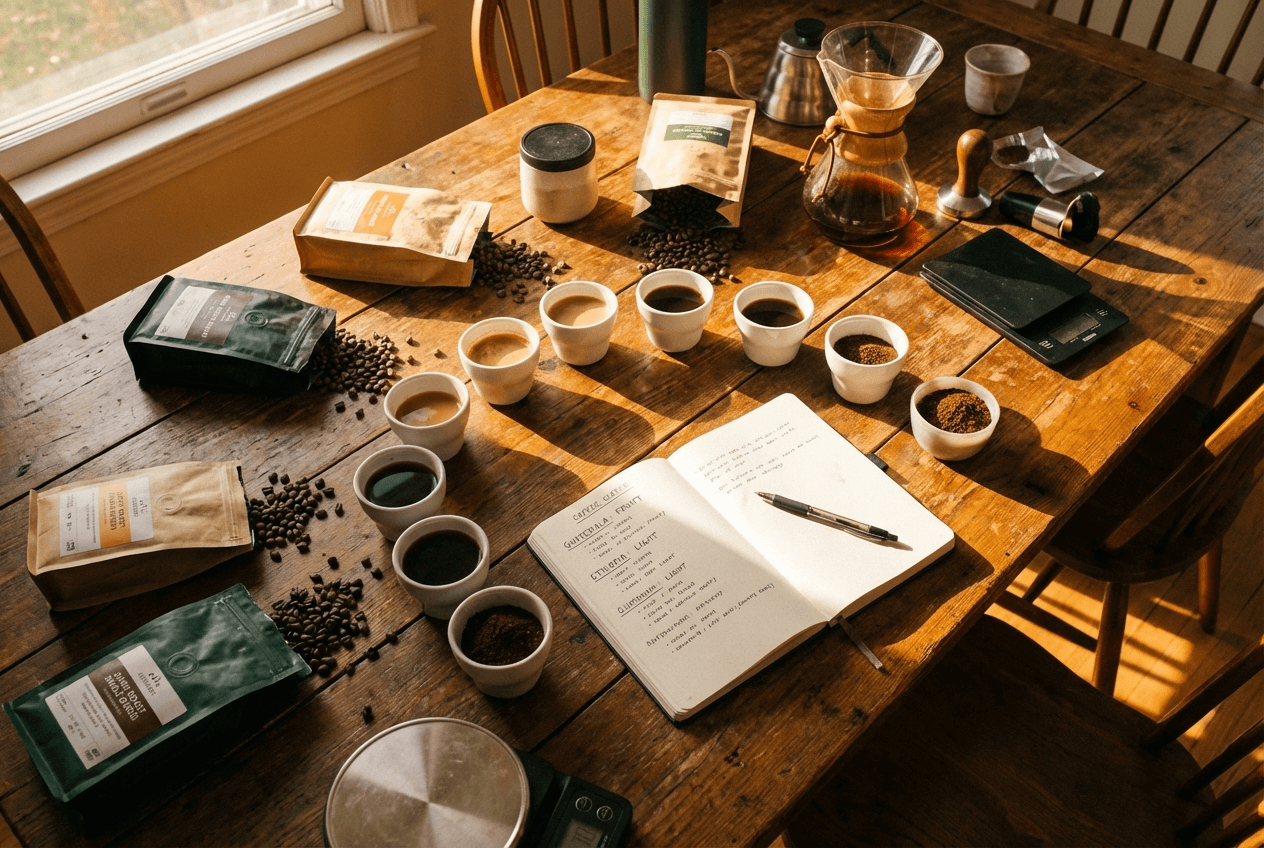
Here's the fastest way to develop your coffee taste: pay attention and keep track.
When you try a new coffee, notice three things:
- Do I like it black, or does it need milk/cream? (Neither answer is wrong.)
- What does it remind me of? Chocolate? Nuts? Fruit? Burnt toast? Use whatever words come to mind.
- Would I buy this again?
That's it. You don't need a coffee vocabulary or tasting certification. You just need to notice your own reactions.
One helpful trick: Next time you're at the grocery store, try using Cafy to scan any packaged coffee before you buy it. It pulls up tasting notes, roast levels, and flavor profiles instantly — so you know what you're getting before you commit. Think of it like a coffee-expert friend in your pocket, whispering "this one has chocolate and hazelnut notes, you'll probably like it" while you stare at the shelf. You can even save coffees you've tried to build your personal coffee collection and track what you enjoy over time.
Start sweet and mild, then gradually push toward bolder flavors as your palate grows. Most people's journey looks something like this:
Month 1-2: Medium roast with milk → Month 3-4: Medium roast, less milk → Month 5-6: Trying light or dark roasts → Month 7+: You know exactly what you like and can spot it on a shelf (or in a scan).
Speaking of caffeine — the FDA recommends no more than 400mg per day for most adults, which is roughly 4 standard cups of brewed coffee. As a beginner, start with one or two cups and see how your body responds.
Frequently Asked Questions
What is the easiest coffee to start with as a beginner?
A medium roast, pre-ground coffee is the lowest-barrier entry point. Folgers Classic Roast or Dunkin' Original Blend are both smooth, widely available, and affordable. If you want zero equipment, Nescafé Gold instant coffee is genuinely good — just add hot water, stir, and you're drinking coffee. For more suggestions, check out our guide to smooth, beginner-friendly coffee picks.
Should beginners drink light or dark roast coffee?
Neither — start with medium roast. Light roasts can taste acidic or fruity, which confuses new palates. Dark roasts can be bitter and smoky, which turns beginners off. Medium roast gives you a balanced, smooth flavor with notes like chocolate and nuts — the sweet spot for learning what you enjoy.
What's the best way to make coffee for beginners at home?
A drip coffee maker is the easiest brewing method — just add grounds, add water, press a button. If you don't have one, a French press ($15-25) makes great coffee with minimal technique. Use about 2 tablespoons of coffee per 6 ounces of water and water that's just below boiling (195-205°F). Try to use freshly ground beans when possible for the best taste.
How do I make coffee less bitter without adding sugar?
Three things reduce bitterness: use medium roast instead of dark, don't use boiling water (let it cool 30-60 seconds), and don't over-brew (4-5 minutes is plenty for most methods). A splash of milk or cream also softens bitterness naturally. And make sure your coffee is fresh — stale beans always brew a more bitter cup.
Is espresso a good choice for coffee beginners?
Straight espresso is intense and can overwhelm new drinkers — it's concentrated coffee in a tiny cup with bold, complex flavor. But espresso-based drinks like lattes and cappuccinos are excellent for beginners because the steamed milk softens the taste beautifully. If you enjoy lattes at a café, that's already a great starting point for your coffee journey. You can gradually reduce the milk over time as your palate develops.
Ready to discover your perfect coffee?
Download Cafy and scan any coffee to see tasting notes, roast levels, and more.
Download Free